Where Democracy Happened Between Cherry Cokes and Chocolate Malts: The Soda Fountain That Ran Small-Town America
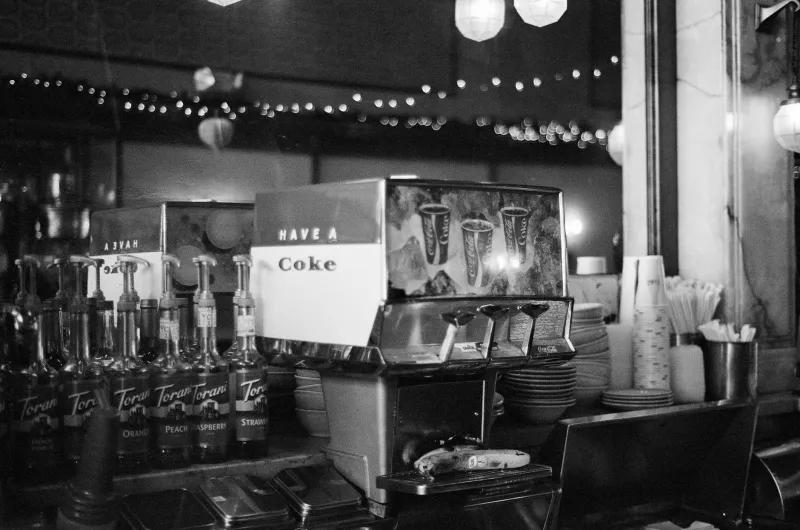
The Marble Counter That Knew Everyone's Business
Every morning at 7:30 sharp, Mayor Henderson would slide onto the same red vinyl stool at Paulson's Drug Store in Cedar Falls, Iowa. By 8:15, he'd be joined by Police Chief Morrison, bank president Williams, and at least three city council members. Over coffee and Danish, they'd hash out everything from snow removal budgets to the new traffic light downtown.
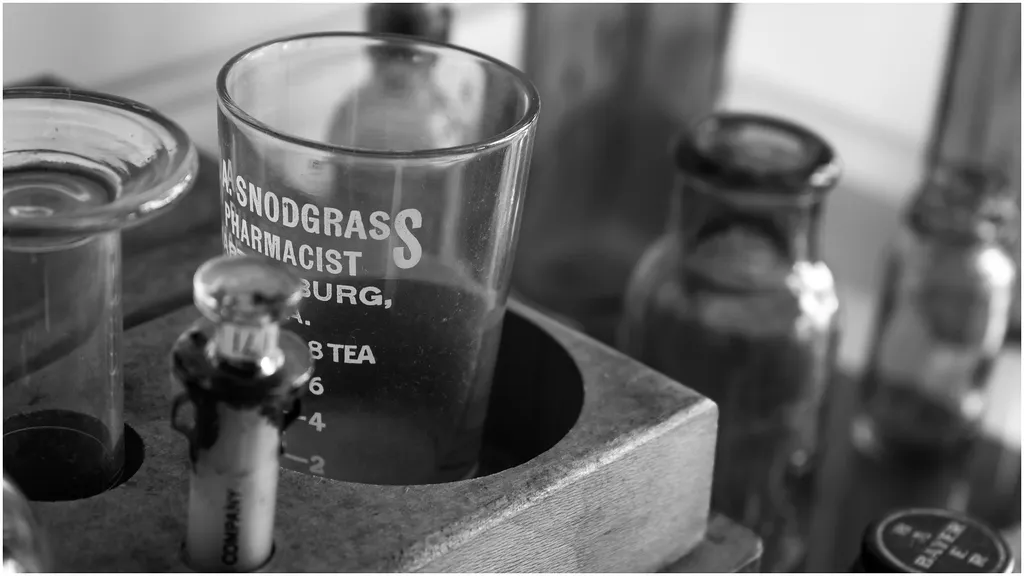 Photo: Paulson's Drug Store, via photos.smugmug.com
This wasn't an official meeting—there were no minutes, no agenda, no public notice. But more municipal business got conducted at Paulson's marble counter than in City Hall. The soda fountain wasn't just serving ice cream sodas; it was serving as the unofficial seat of local government.
That was America in 1955, when democracy was as accessible as a cherry phosphate.
More Than Medicine: The Drugstore as Social Hub
The American drugstore soda fountain emerged from practical necessity. Pharmacists in the late 1800s needed to mask the bitter taste of medicines, so they mixed them with flavored syrups and carbonated water. But what started as medical necessity evolved into social institution.
By the 1920s, every self-respecting drugstore featured an elaborate soda fountain—marble counters, chrome fixtures, and a soda jerk in a white paper hat who could craft dozens of different drinks. These weren't afterthoughts tucked into corner spaces; they were the main attraction, often occupying half the store.
The fountain served as neutral ground in communities where the church was too religious, the bar too rowdy, and the bank too formal. Anyone could afford a nickel Coke, and everyone was welcome at the counter.
Where Teenagers Learned to Be Adults
For American teenagers, the soda fountain was graduate school in social interaction. This was where you learned to flirt, negotiate, and navigate the complex hierarchies of small-town life. The jukebox in the corner provided soundtrack to first dates, break-ups, and the endless drama of adolescence.
Saturday afternoons brought clusters of high school students sharing sundaes and plotting weekend adventures. The soda jerk—often a teenager himself—served as unofficial counselor, mediator, and keeper of secrets. He knew who was dating whom, which parents were getting divorced, and which families were struggling financially.
These weren't casual encounters. In towns where everyone knew everyone, the soda fountain was where reputations were built and destroyed, where social alliances formed and dissolved over chocolate malts and root beer floats.
The Information Exchange
Before television news, social media, or even reliable radio coverage, the soda fountain served as the community's primary information network. News traveled faster at Paulson's than through any official channel.
Mrs. Patterson heard about the Hendricks' house fire while ordering her usual vanilla phosphate. The high school principal learned about budget cuts from casual conversation over coffee. Farmers got weather predictions not from meteorologists, but from other farmers who'd noticed which way the wind was blowing.
This information network was remarkably efficient and surprisingly accurate. People staked their reputations on the news they shared, creating a system of accountability that modern social media completely lacks.
The Economics of Community
The soda fountain operated on economics that seem impossible today. A cherry Coke cost a nickel. A banana split—elaborate enough to feed three people—might cost thirty-five cents. These weren't loss leaders or marketing gimmicks; they were sustainable prices that allowed the fountain to serve as community gathering space without excluding anyone.
The profit margins were thin, but the social value was enormous. Drugstore owners understood that the fountain brought people into the store regularly, building relationships that translated into loyalty for everything from prescriptions to birthday gifts.
The Death of the Third Place
By the 1960s, the soda fountain was already dying. Suburban sprawl scattered communities across wider areas. Shopping malls centralized retail in climate-controlled environments. Fast food restaurants offered cheaper, faster alternatives to hand-dipped ice cream.
Most significantly, Americans stopped needing a neutral meeting ground. Television brought entertainment into homes. Air conditioning made staying inside more comfortable. Cars made it easier to visit friends privately rather than meeting in public spaces.
The last soda fountains disappeared not because they weren't profitable, but because they weren't necessary. American communities had found other ways to organize themselves—ways that didn't require shared physical space.
What Replaced the Fountain
Today's coffee shops represent America's attempt to recreate what the soda fountain provided. Starbucks deliberately designs spaces to encourage lingering—comfortable chairs, free Wi-Fi, acoustic music that facilitates conversation.
But something fundamental is different. Modern coffee shops charge nine dollars for what the soda fountain provided for fifty cents. They're designed for individual consumption rather than community interaction. You're more likely to see people working alone on laptops than engaging in the kind of cross-generational conversation that defined fountain culture.
The economic model has also shifted. Coffee shops survive on high margins and rapid turnover, not the patient relationship-building that sustained soda fountains for decades.
The Politics of Shared Space
The soda fountain's political function was particularly unique. In an era before city council meetings were televised or town halls were scheduled, the fountain provided continuous, informal access to local leadership.
Citizens could voice complaints, suggest improvements, or lobby for changes simply by showing up at the right time. Politicians couldn't hide behind appointment schedulers or press secretaries—they were expected to be available, approachable, and accountable to anyone who could afford a cup of coffee.
This accessibility created a kind of grassroots democracy that's almost unimaginable today. Local government felt personal because it was personal, conducted face-to-face between people who saw each other regularly.
The Lost Art of Casual Democracy
Perhaps most importantly, the soda fountain taught Americans how to disagree civilly. When you knew you'd see someone again tomorrow—and next week and next month—you learned to argue without burning bridges. Political differences were personal differences that had to be managed within ongoing relationships.
The fountain's social rules encouraged debate but discouraged hostility. You could argue about school funding or road repairs, but you couldn't storm out dramatically or block someone on social media. Conflict had to be resolved through conversation, compromise, and time.
What We're Still Looking For
The enduring appeal of shows like "Cheers" or the popularity of community-oriented businesses like local breweries suggests Americans are still hungry for the kind of social connection the soda fountain provided. We want spaces where everybody knows our name, where we can engage with our neighbors across generational and political lines.
Some communities are deliberately trying to recreate fountain culture—through community centers, farmers markets, or businesses designed specifically to encourage social interaction. But these efforts feel artificial compared to the organic social ecosystem that emerged around a simple marble counter and some flavored syrup.
The Irreplaceable Loss
You can't recreate the soda fountain because you can't recreate the social conditions that made it necessary. We live in different communities now—larger, more diverse, more mobile. We have different needs, different schedules, different ways of connecting with each other.
But something valuable was lost when Americans stopped gathering regularly in shared spaces, when democracy moved from marble counters to city halls, when community became something we joined rather than something we lived.
The soda fountain represented a time when social life was public life, when politics was personal, and when the most important conversations happened not in formal settings but over cherry Cokes and chocolate malts, between neighbors who knew they'd see each other again tomorrow.