When Going to the Movies Was Something You Dressed Up For
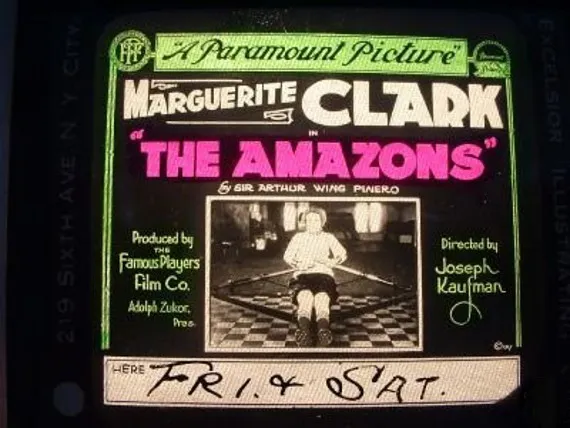
Photo: Paramount Pictures, Public domain, via Wikimedia Commons
Picture a Tuesday night in 1948 in a mid-sized American city — Toledo, say, or Tulsa, or Tacoma. A couple gets dressed. Not dressed the way we mean it now, not just changed out of work clothes, but actually dressed. The woman puts on a good dress. The man wears a jacket. They're going to the movies, and going to the movies means going somewhere worth looking your best for.
The theater they walk into has a lobby with a chandelier. The ceiling is painted to look like a night sky. There are uniformed ushers with flashlights who walk them to their seats. The curtain in front of the screen is velvet. When the lights go down and that curtain parts and the projector throws light across a screen forty feet wide, there is genuinely nothing else in American civilian life that produces an experience anything like it.
That was a regular Tuesday.
The Movie Palace Was Designed to Overwhelm You
The golden age of American movie theater architecture ran roughly from the 1910s through the 1950s, and the buildings constructed during that era were not subtle. They were designed by architects who understood that the movies needed to feel like an event — that the experience of leaving your ordinary life and entering a story required a physical transition, a space that announced you were somewhere different now.
Theaters like the Fox in Detroit, the Paramount in Oakland, the Roxy in New York City, and hundreds of their smaller regional cousins across the country were built with the explicit goal of making every customer feel, for a few hours, like they lived in a grander world than the one they'd walked in from. Lobbies featured marble floors and gilded ceilings. Auditoriums were designed with Spanish courtyard motifs, Egyptian Revival columns, and atmospheric lighting systems that could simulate dusk fading into starry night. The Roxy seated over 5,000 people and employed a staff of more than 300.
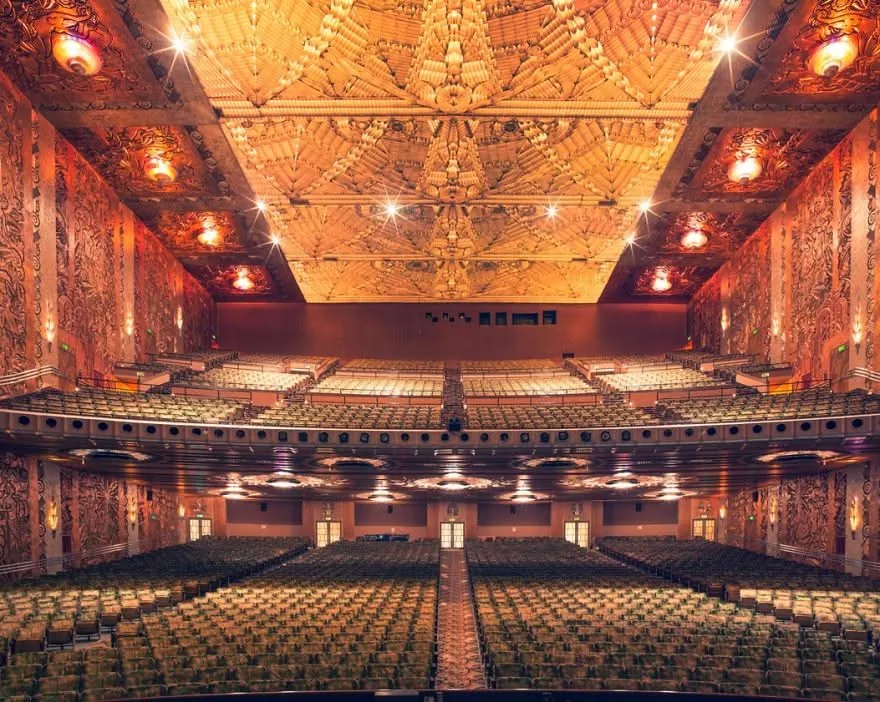 Photo: Paramount in Oakland, via i.pinimg.com
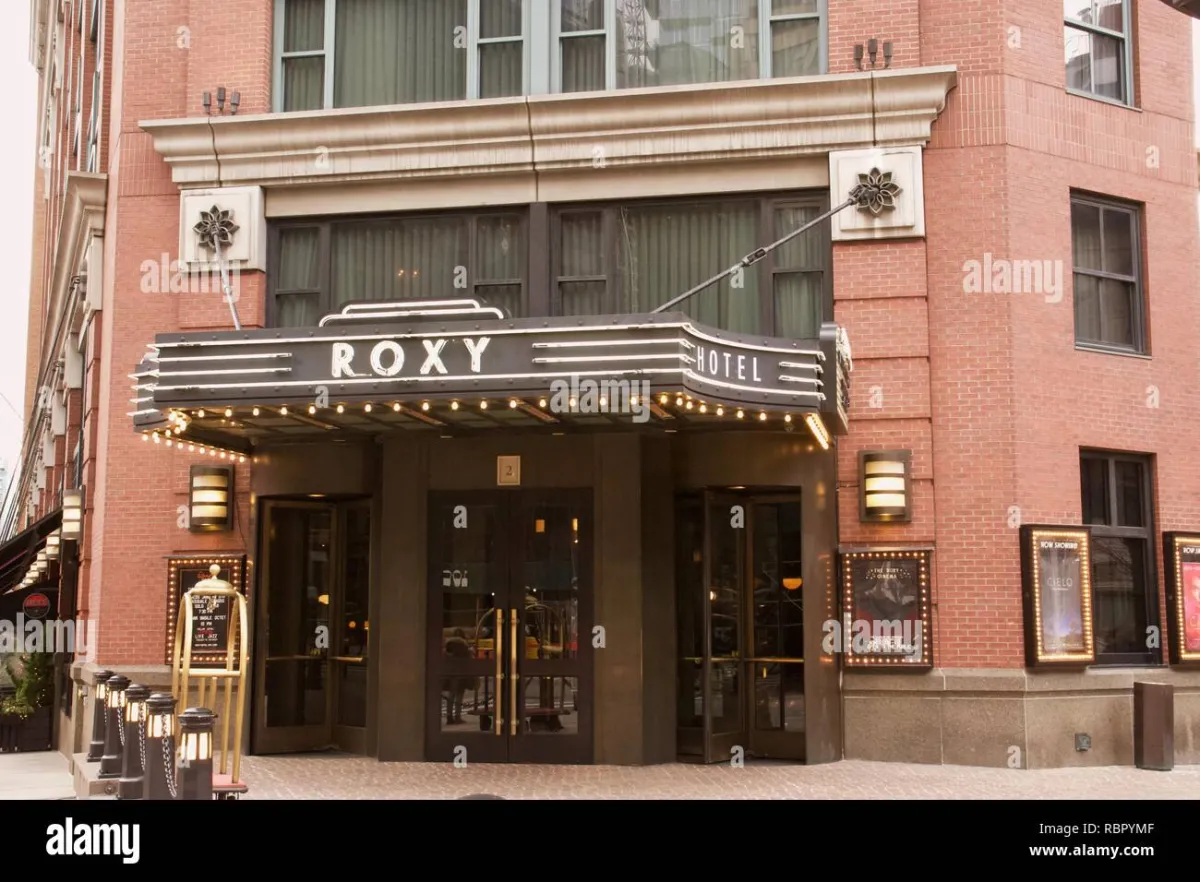 Photo: Roxy in New York City, via c8.alamy.com
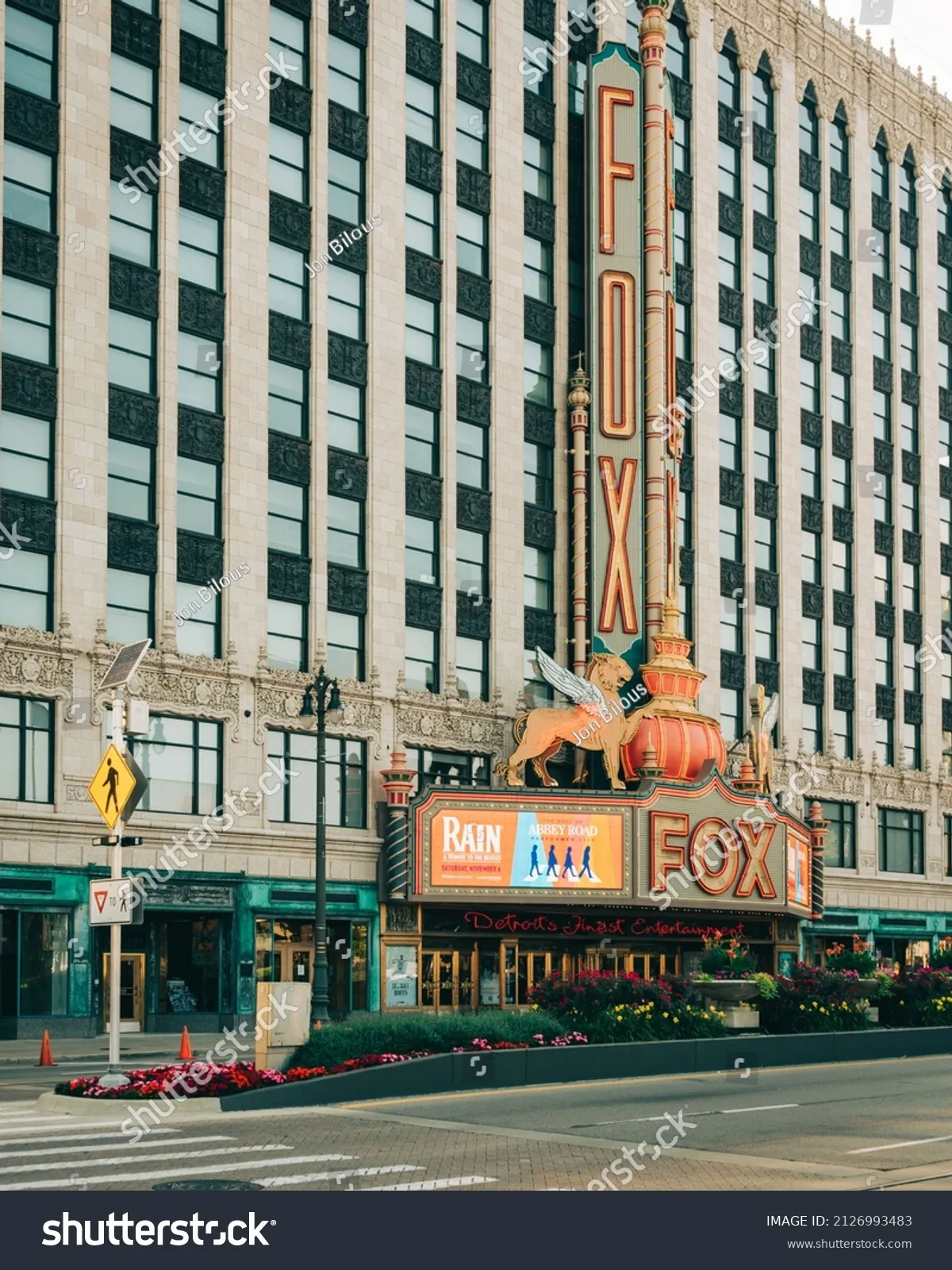 Photo: Fox in Detroit, via www.shutterstock.com
You weren't just watching a movie. You were participating in a civic ritual.
The Screen Was the Whole Point
Beyond the architecture, there was the practical reality of what the screen itself represented. For most Americans through the mid-twentieth century, the movie theater offered something genuinely unavailable anywhere else: a moving image at a scale that made the human figures on it larger than life, literally. A close-up of a face on a forty-foot screen is a fundamentally different experience from watching that same face on a television set — and for most of the theater era, television either didn't exist or offered a blurry, black-and-white picture on a screen roughly the size of a cafeteria tray.
This meant that when a film was released, it carried cultural weight that's almost impossible to recreate today. When Gone with the Wind opened in 1939, or when Ben-Hur hit screens in 1959, or when Jaws arrived in the summer of 1975, there was exactly one way to see those films: you went to a theater. You sat in the dark with strangers. You experienced the story together, and the collective gasp or laugh or silence of 500 people sharing the same moment was part of the film itself.
Hollywood understood this. Films were made to be experienced at that scale, in that context. The widescreen formats developed in the 1950s — CinemaScope, Cinerama, VistaVision — were explicit responses to the threat of television, designed to offer something a living room simply could not replicate.
How Streaming Changed the Cultural Math
The erosion happened in stages. Home video in the 1980s gave audiences the ability to watch movies on their own schedule, which was genuinely liberating. Multiplexes in the 1990s traded grandeur for efficiency, replacing single-screen palaces with eight-screen complexes that felt more like airport terminals than cathedrals. DVD quality improved. Flat-screen televisions got larger and cheaper. And then, somewhere around 2010, streaming arrived and quietly renegotiated the entire relationship between a film and its audience.
Today, a major studio release can appear simultaneously in theaters and on a streaming platform within weeks. A viewer watching at home can pause, rewind, check their phone, feed the dog, and return to the film without missing anything permanently. The experience is convenient in ways that would have seemed miraculous to the couple getting dressed for their Tuesday night in 1948. It is also, almost by definition, casual in ways that the old experience never was.
The cultural consequence is real. When everyone can watch a film anywhere at any time, a film can no longer function as a shared national moment in the same way. The opening weekend of a major release still generates headlines, but the conversation fractures almost immediately as different people watch on different platforms at different times in different states of attention. The film enters the culture differently — more broadly, perhaps, but with less collective force.
What the Big Screen Still Does That Nothing Else Can
Here's the thing that streaming advocates sometimes underestimate: the theatrical experience, even in its diminished modern form, still does something physiologically distinct. Researchers who study film spectatorship have noted that the combination of scale, darkness, controlled sound, and the physical presence of other viewers creates a state of immersive attention that home viewing rarely matches. You're less likely to multitask. You're more likely to feel the film emotionally. The experience of being surrounded by strangers who are all affected by the same story at the same moment is a form of community that doesn't have a streaming equivalent.
The old movie palaces understood this intuitively. They built rooms specifically engineered to produce that state — to strip away the ordinary world and replace it with something larger. Most of those buildings are gone now, converted into churches or condominiums or parking lots. The ones that remain are often landmarks, preserved precisely because people recognize that something irreplaceable existed in those spaces.
You can watch anything, anywhere, anytime. What you can't quite replicate is the feeling of being genuinely somewhere else — dressed up, in the dark, with 500 strangers, all of you leaning forward at exactly the same moment.