The Editor Who Knew Which Elm Street the Fire Truck Went Down: The Slow Death of Local News
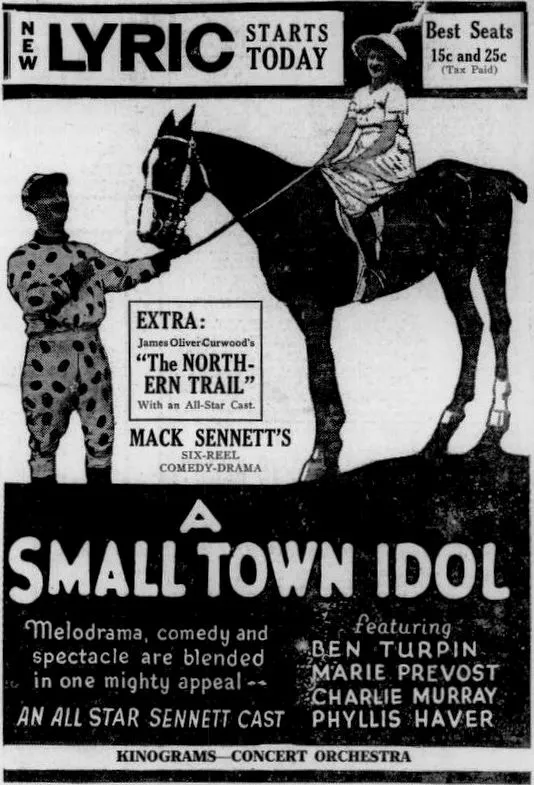
Photo: Mack Sennett Comedies / Associated First National, Public domain, via Wikimedia Commons
Somewhere in a shoebox in a lot of American homes, there are old copies of newspapers that nobody would recognize today. Not the New York Times. Not the Chicago Tribune. Smaller than that. The Millbrook Gazette. The Harlan County Courier. The Riverside Weekly Observer. Papers with circulations in the low thousands, printed on equipment that rattled the floor when it ran, edited by one or two people who could tell you the name of every alderman, every high school coach, and every family that had farmed the same land for four generations.
Those papers were never glamorous. The writing wasn't always polished. The photography was frequently blurry. But they did something that no algorithm, no aggregator, and no national media outlet has ever successfully replicated: they paid professional attention to the specific, granular, irreplaceable details of a specific place.
What a Real Local Paper Actually Covered
To understand what's been lost, you have to understand what a genuinely local newspaper actually was — not as an abstraction, but as a weekly or daily object that people read cover to cover because every story was about someone they might bump into at the hardware store.
A thriving small-town paper in, say, 1965 would run a front page that might include a zoning dispute over a proposed gas station on the edge of town, a profile of a local teacher celebrating her thirtieth year in the classroom, and a report on the county commissioners' decision to repave Route 9. Inside, you'd find the police blotter (which everyone read first), the school honor roll, the church calendar, the classified ads, the letters to the editor — which were often genuinely contentious — and the sports section, which covered not just the varsity football team but the junior varsity, the middle school basketball program, and the results of the Tuesday night bowling league at the VFW hall.
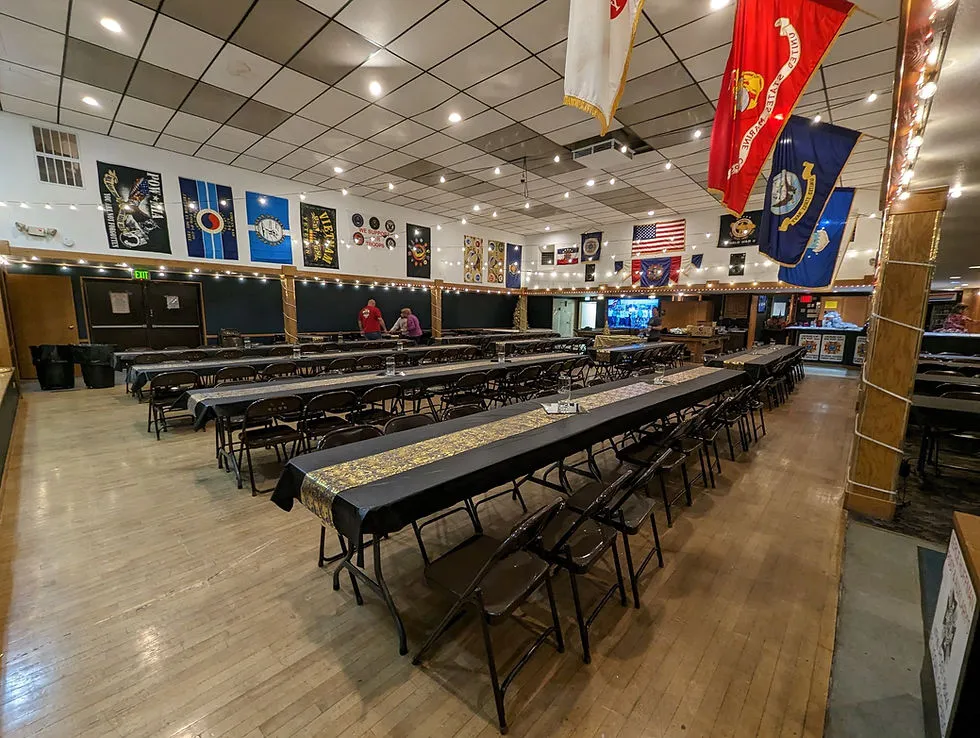 Photo: VFW hall, via static.wixstatic.com
None of this was nationally significant. All of it was locally essential.
The person writing it wasn't a journalist who'd parachuted in from somewhere else. They were your neighbor. They went to the same Fourth of July parade you went to. Their kids played little league with your kids. When the editor of the Millbrook Gazette wrote about the school board's budget meeting, it wasn't an assignment handed down from a corporate desk — it was a story about an institution that educated their own children, and the accountability that came from that personal stake was real and specific and impossible to fake.
The Numbers Tell a Grim Story
American local news has been contracting for decades, but the pace of that contraction has accelerated dramatically in the twenty-first century. According to research from Northwestern University's Medill School, the United States lost more than a quarter of its newspapers between 2005 and 2023 — roughly 2,900 papers, the majority of them local weeklies and dailies serving small and mid-sized communities. More than 200 counties across the country now have no local news outlet of any kind. Researchers have a name for these places: news deserts.
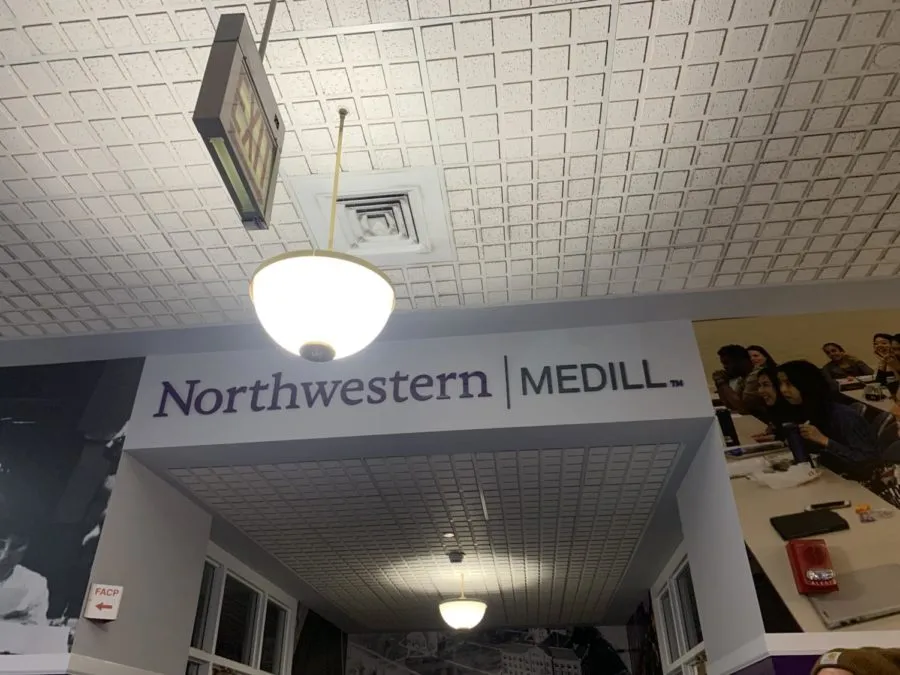 Photo: Northwestern University's Medill School, via vipertimes.com
The economics are straightforward and brutal. Classified advertising, which once funded a significant portion of local newsroom budgets, migrated almost entirely to Craigslist and then to Facebook Marketplace. Display advertising followed as local businesses discovered they could reach customers more cheaply through social media. Print circulation declined as readers moved online. Digital advertising revenue, when it arrived, went overwhelmingly to Google and Facebook rather than to the local outlets generating the content those platforms distributed. The financial model that had sustained local journalism for more than a century collapsed within about fifteen years.
What replaced it is a patchwork. Some communities have nonprofit news startups doing genuinely important work with small staffs and uncertain funding. Some have hyperlocal Facebook groups where neighbors share information of wildly varying accuracy. Some have nothing.
What Disappears When No One Is Watching
The consequences of local news decline are not theoretical. They've been measured. Studies have found that communities that lose their local newspaper see lower voter turnout in local elections, higher municipal borrowing costs (because bond markets price in reduced government accountability), and reduced civic participation across multiple dimensions. When no one is professionally assigned to attend the city council meeting, fewer people know what happened at the city council meeting. When fewer people know what happened, fewer people show up to the next one. The feedback loop runs in one direction.
There are subtler losses too. The local paper was the institution that decided, by the act of coverage, that things were worth remembering. The retirement of a teacher who'd spent thirty years shaping the children of a town. The closing of a diner that had operated since 1941. The death of a veteran who'd never been famous outside a ten-mile radius but whose life had mattered enormously within it. Obituaries in small-town papers were often written with a care and specificity that national outlets reserve for celebrities — because to the editor writing them, these were not anonymous members of the public. These were people.
When that institutional memory disappears, it doesn't migrate somewhere else. It simply stops being recorded.
The Thing That Can't Be Automated
There have been various attempts to replace local journalism with technology. Some news organizations have experimented with AI-generated reports on local government meetings, sports scores, and real estate transactions. The results are technically functional and humanly hollow. An algorithm can report that the city council voted 4-3 on a rezoning application. It cannot tell you that the councilman who cast the deciding vote used to own the property in question, or that the woman who spoke during public comment has been fighting this development for three years, or that the planning director looked uncomfortable in a way that suggests there's more to this story.
That contextual knowledge — the knowledge that comes from being embedded in a community over time, from knowing the history and the personalities and the long-running disputes — is not a data problem. It's a human presence problem. And the only solution to a human presence problem is actual humans, showing up, paying attention, and being professionally responsible for what they report.
The Millbrook Gazette knew which Elm Street the fire truck went down because the person writing the story lived on Maple, heard the sirens, and went to check. That's not a workflow. That's a neighbor doing their job. And right now, in hundreds of American communities, that job has gone unfilled — and the town is quieter, and smaller, and a little less knowable for it.