The Voice That Made America Feel Smaller: When Real People Connected Every Phone Call
The Plug-and-Play Social Network
Pick up any phone in America before 1960, and the first voice you'd hear wasn't a recording or a robotic menu. It was Mabel, or Dorothy, or whoever happened to be working the switchboard that morning. "Number, please?" she'd ask, and you'd tell her you needed Doc Peterson or the fire department or maybe just wanted to check if the Hendersons were home yet.
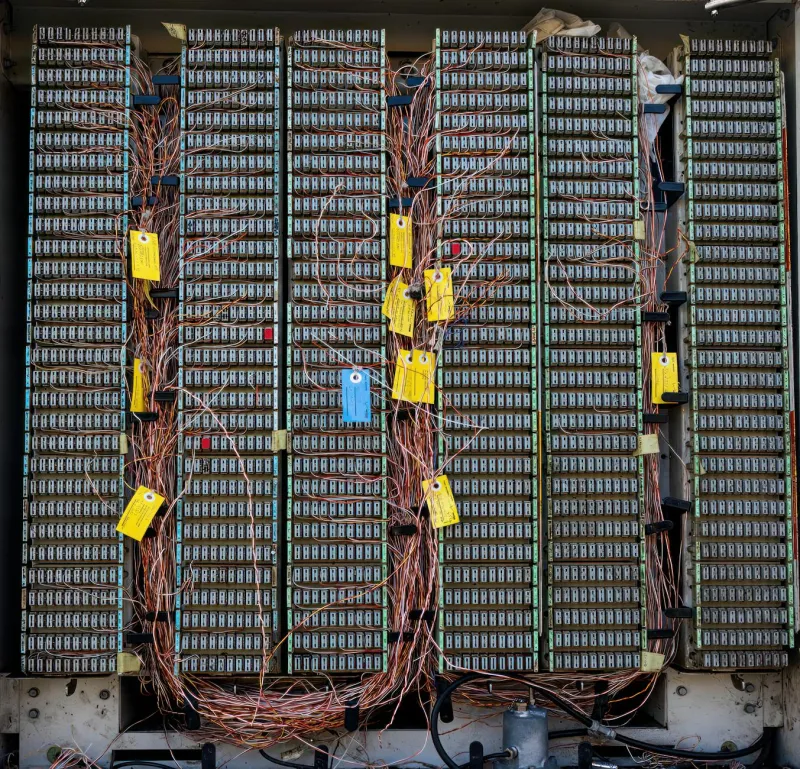
What happened next was pure human intelligence at work. The operator would physically insert a cable into the correct hole on a massive board covered in hundreds of jacks, creating an electrical connection between two points that might be across town or across the country. But more than that, she was connecting two lives—and she often knew exactly why.
When Technology Had a Human Face
Switchboard operators weren't just human routers. They were the memory banks of their communities. Mrs. Johnson at the town exchange knew that Dr. Williams was making house calls on Tuesday afternoons, so she'd take messages. She knew the pharmacy closed at six, the school principal worked late on Thursdays, and which calls were genuinely urgent enough to interrupt someone's dinner.
 Photo: Dr. Williams, via miamioh.edu
During emergencies, operators became the nervous system of the entire town. When fire broke out or someone needed an ambulance, the operator would stay on the line, coordinating between emergency services, family members, and anyone else who needed to know. She'd patch together conference calls decades before the technology officially existed, simply by keeping multiple connections open and managing the conversation.
The Art of Selective Service
Perhaps most remarkably, operators exercised judgment about which calls deserved immediate attention. If you were calling to gossip about the church social while the town's only doctor was dealing with a medical emergency, your call might mysteriously encounter "technical difficulties" until the crisis passed.
This wasn't arbitrary power—it was community wisdom applied in real time. Operators knew the rhythm of their towns, the hierarchy of needs, and the difference between genuine urgency and everyday chatter. They were traffic controllers for human connection, making split-second decisions about how to best serve their neighbors.
The Economics of Personal Service
Long-distance calls required even more human intervention. Operators would calculate costs, monitor connection quality, and often stay on the line to ensure clarity. Calling from New York to California meant working with multiple operators across the country, each one adding their local knowledge to help your voice travel three thousand miles.
 Photo: New York, via ak.picdn.net
The cost was significant—a three-minute call from coast to coast in 1950 cost about $2.50, roughly $30 in today's money. But that expense bought you something beyond mere connection: human oversight, technical troubleshooting, and the assurance that a real person was invested in making your call successful.
When Automation Arrived
Direct dialing began appearing in major cities during the 1950s, promising efficiency and cost savings. Suddenly, you could bypass the operator entirely, spinning a rotary dial or pushing buttons to create your own connection. Phone companies marketed this as progress—faster service, lower costs, greater privacy.
What they didn't advertise was what we were losing. Without operators as intermediaries, emergency coordination became more complex. Community knowledge disappeared from the phone system. The gentle human filter that had managed the flow of information vanished, replaced by the democratic chaos of anyone being able to call anyone at any time.
The Modern Maze
Today's phone experience would bewilder those 1950s callers. Press 1 for English, press 2 for billing, press 3 for technical support, press 0 to speak to a representative—except pressing 0 often leads to another menu, or a chatbot, or a wait time that would have been unthinkable when Mabel was standing by.
We carry devices more powerful than entire 1960s telephone exchanges, yet reaching a human being has become an achievement worthy of celebration. Customer service representatives, when you finally reach them, know nothing about your community, your history, or your specific needs. They follow scripts, not intuition.
The Paradox of Connection
The irony runs deeper than mere nostalgia. We have more ways to communicate than ever—text, email, video chat, social media—yet studies consistently show Americans feeling more isolated and less connected to their communities than previous generations.
Perhaps the switchboard operator represented something we didn't fully appreciate until it was gone: the value of human judgment in managing human connection. She wasn't just a technological intermediary; she was a community member with skin in the game, someone who understood that communication is about more than efficiently routing information from point A to point B.
The Lost Art of Managed Communication
When we eliminated the human layer from our communication infrastructure, we gained speed and lost wisdom. We can now reach anyone instantly, but we've also lost the gentle filtering system that helped communities function as communities rather than collections of individuals.
The next time you're trapped in a phone tree or shouting at an AI assistant, remember Mabel at her switchboard. She would have known exactly who you needed to talk to, and she would have made sure you got through.