Partly Cloudy With a Chance of Just Deal With It: Life Before the Weather App Needed to Be Right
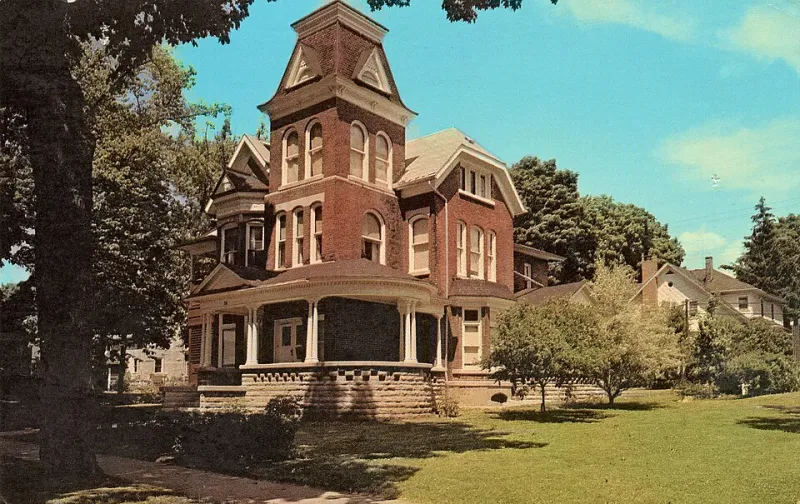
Photo: Steve Shook from Moscow, Idaho, USA, CC BY 2.0, via Wikimedia Commons
Somewhere in a garage in rural Indiana, there is probably still a barometer screwed to the wall beside the door. It belonged to a grandfather who checked it every morning the way other people check their phones — not anxiously, but habitually. A rising needle meant things were probably fine. A falling needle meant bring a jacket and maybe reconsider the picnic. That was the system. It worked well enough for a lifetime.
His grandchildren check Weather.com, Dark Sky, the Weather Channel app, and the National Weather Service radar before deciding whether to leave the house without an umbrella. They still sometimes get wet.
This is a story about uncertainty — about what it meant to live with it, and what it cost us to spend two decades trying to engineer it away.
The Forecast Was a Suggestion, Not a Promise
In the pre-digital era, the weather forecast was a reasonable guess delivered with appropriate humility. The newspaper gave you a three-day outlook. The local television meteorologist — often working from hand-drawn weather maps and limited satellite data — told you what tomorrow probably held. Radio updated you in the morning.
Nobody expected precision. When the weatherman said partly cloudy, chance of afternoon showers, everyone understood that to mean we genuinely don't know, so plan accordingly. And they did. Families planning weekend road trips built in flexibility as a matter of course. Farmers read the sky, the wind direction, the behavior of livestock. Wedding planners booked tents as a matter of standard practice, not paranoia.
The forecast was one input among many. It was never the final word.
Folk Wisdom Was a Distributed Weather Network
Before professional meteorology reached into every American home, weather knowledge was local, inherited, and remarkably sophisticated. Every region had its own accumulated vocabulary of sky-reading.
Red sky at morning, sailors take warning. This isn't superstition — it's a valid observation about how weather systems move. When leaves show their undersides, rain is coming. Also true: low pressure causes leaves to curl and expose their lighter undersides. If the cows are lying down, it'll rain. Debated, but persistent.
Grandmothers in Missouri knew that a ring around the moon meant precipitation within 48 hours. Fishermen on the Chesapeake could read the color of the water and the behavior of birds. Kansas farmers understood the particular quality of a late-afternoon sky that meant tornado conditions better than any early warning system.
This knowledge wasn't mystical. It was empirical — built from generations of paying close attention to the same patch of sky and cataloging what followed. It was, in its own way, a form of data collection. Slower, more personal, and deeply embedded in place.
Planning Around Uncertainty Was a Life Skill
Here's what gets lost in the nostalgia: living with weather uncertainty wasn't just inconvenient — it actively shaped how Americans made decisions.
Planning a family camping trip to the Smokies in the 1960s meant accepting that you might get rained on for two days and that this was simply part of the experience. Outdoor weddings included an understanding between hosts and guests that nature was a participant, not a problem to be solved. County fairs, harvest festivals, and Fourth of July celebrations were scheduled and held regardless of forecast, because the forecast wasn't reliable enough to justify cancellation and the community needed the event to happen.
This required a psychological posture that's increasingly rare: the willingness to commit to something knowing full well it might not go the way you hoped. You made your best guess, you prepared as well as you could, and then you went.
There's a word for that. It used to just be called being an adult.
When Precision Became an Expectation
The Weather Channel launched in 1982 and changed the relationship between Americans and weather forecasting in ways nobody fully anticipated. Suddenly there was a 24-hour television network dedicated to meteorological information — not as a public service, but as entertainment. Weather became content.
Then came the internet, then smartphones, then hyperlocal apps capable of showing you precipitation probability for your specific zip code in fifteen-minute intervals. Dark Sky — before Apple acquired and eventually shut it down — could tell you it would start raining at 3:47 p.m. and stop by 4:12 p.m. People began to expect that level of precision as a baseline.
The problem is that the atmosphere is a chaotic system. Improved modeling and satellite coverage have made forecasts genuinely better — the five-day forecast today is roughly as accurate as the two-day forecast was in 1980. That's real progress. But the accuracy of the tools outpaced the accuracy of human expectations. People started treating forecasts as commitments rather than estimates.
The result is a peculiar modern frustration: being angry at the weather for not matching the app. For failing to perform as predicted. For being, in a word, weather.
The Anxiety We Bought With the Precision
There's a psychological cost to constantly monitoring things you cannot control. Meteorologists and behavioral researchers have both noticed it: the more granular and frequent weather information becomes, the more weather-anxious many people get.
When you check the radar six times before a picnic, you're not reducing your exposure to risk — you're just redistributing your attention toward it. The grandfather with the barometer checked it once in the morning and then went about his day. He'd done what he could. The rest was up to the sky.
That's not ignorance. That's a healthy relationship with uncertainty — an understanding that some things are genuinely outside your influence, and that making peace with that fact is more productive than refreshing an app every twenty minutes.
The Sky Is Still the Same Sky
The clouds forming over the Rockies this afternoon don't know you have a radar app. The storm building in the Gulf doesn't care that you planned a beach wedding six months ago. The late-spring frost that kills the tomato seedlings doesn't consult the forecast before it arrives.
Nature was always going to be unpredictable. What changed isn't the weather — it's our tolerance for not knowing what comes next.
The barometer on the garage wall is still right about as often as it ever was. It just doesn't get checked anymore. We're too busy refreshing the hourly forecast and wondering why the rain showed up eight minutes late.