The Musical Pied Piper: When One Truck Could Empty Every House on the Block
The Pavlovian Melody
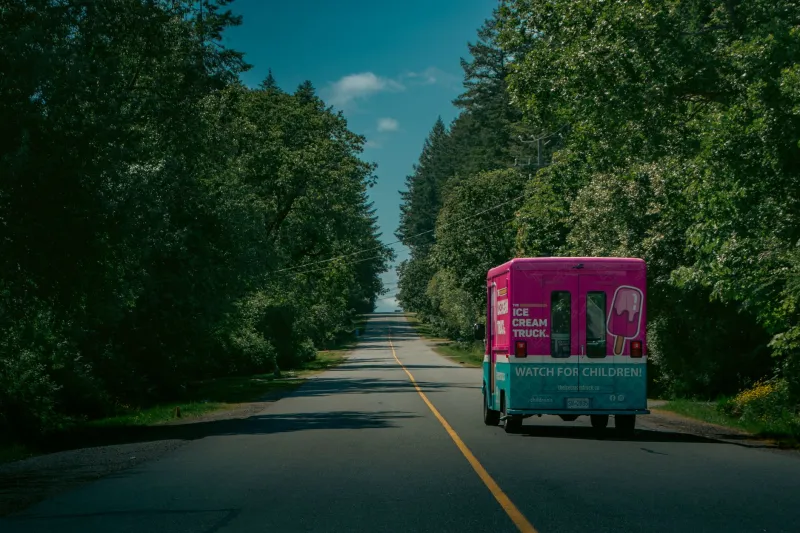
There was no mistaking that sound. Somewhere between a carnival calliope and a music box having a nervous breakdown, the ice cream truck's tinkling melody could penetrate screen doors, television volumes, and the deepest afternoon naps. But what happened next was pure magic: a neighborhood transformation that would make a flash mob look organized.
Within thirty seconds of that first musical note, screen doors would bang open across three city blocks. Children would materialize from backyards, basements, and bedrooms like they'd been launched from secret underground bunkers. Parents would emerge squinting into the sunlight, fumbling for loose change in kitchen drawers and couch cushions. Even the teenagers who were too cool for everything would suddenly remember they had a weakness for orange push-up pops.
This wasn't just commerce—it was community theater performed daily across American neighborhoods, with a soundtrack that could wake the dead and unite sworn enemies in the universal pursuit of frozen sugar.
The Great Equalizer on Wheels
The beauty of the ice cream truck was its complete democracy. Rich kids and poor kids stood in the same chaotic line, quarters and crumpled dollar bills equally welcome. The shy kid who never spoke in class would find himself negotiating with the loud kid from down the street about whether to split a two-stick Popsicle. Siblings who'd been at each other's throats all morning would suddenly become allies in convincing Mom that yes, they absolutely needed ice cream right now.
Age barriers dissolved completely. Preschoolers clutched their precious coins while teenagers helped them reach the service window. Grandparents would shuffle out of air-conditioned houses they hadn't left all day, drawn by the promise of watching their grandchildren experience the same simple joy they'd known fifty years earlier.
The truck driver—usually a patient soul who understood he was conducting more than just sales transactions—would wait while families made group decisions, helped count change, and negotiated the complex politics of who got what. He'd remember that the little girl in the yellow house was allergic to chocolate, that the twins always wanted the same thing but in different colors, and that Mrs. Peterson from the corner house would buy a box of ice cream sandwiches every Friday to keep in her freezer for neighborhood kids.
The Spontaneous Summer Festival
What made the ice cream truck special wasn't just the ice cream—it was the unplanned community gathering it created. In an era before playdates were scheduled weeks in advance and children's activities were organized by committees, the ice cream truck represented pure spontaneity. No one knew when it would arrive, which route it would take, or how long it would stay. This uncertainty made its appearance feel like a gift.
The street would briefly become a festival ground. Parents would find themselves in conversations with neighbors they'd only waved to before. Kids would discover that the weird family three houses down actually had children their age. Someone would inevitably spill something sticky, someone else would drop their ice cream, and someone would always try to pet the driver's dog if he had one.
These weren't planned community-building exercises—they were organic moments of shared humanity, triggered by nothing more complex than the desire for a frozen treat on a hot day. The ice cream truck was America's original social network, connecting people not through algorithms and shared interests, but through proximity and the simple pleasure of vanilla ice cream melting faster than you could eat it.
The Decline of the Jingle
By the 1990s, the ice cream truck was already becoming an endangered species. Suburban developments with winding cul-de-sacs made traditional routes inefficient. Two-income families meant fewer adults were home during prime ice cream truck hours. Most importantly, children's lives became increasingly scheduled and supervised, leaving less room for the spontaneous outdoor play that made ice cream truck visits possible.
Food safety regulations, insurance costs, and licensing requirements made operating an ice cream truck more complex and expensive. Some neighborhoods banned them entirely, citing noise ordinances or traffic concerns. Others restricted their hours or required permits that took weeks to obtain.
The rise of chain stores and bulk buying meant families could stock their freezers with brand-name ice cream for less than the cost of a few truck purchases. Why wait for the ice cream truck when you could have Häagen-Dazs in your freezer 24/7? The convenience was undeniable, but something essential was lost in the transaction.
The Screen Door Exodus
The ice cream truck's decline mirrors a broader transformation in American neighborhood life. The screen doors that once banged open at the first sound of that tinkling melody are now solid barriers between climate-controlled indoor spaces and the unpredictable outdoor world. The children who once poured into streets now pour into minivans for scheduled activities at climate-controlled facilities.
Modern parents, shaped by decades of stranger danger warnings and lawsuit anxieties, are understandably hesitant to let their children chase musical trucks driven by people they don't know. The informal neighborhood supervision that once made such activities feel safe—when every adult on the block felt some responsibility for every child—has largely disappeared.
Today's children get their frozen treats delivered through apps, ordered from grocery stores, or purchased during organized outings to frozen yogurt shops with WiFi and sanitized play areas. The experience is safer, more hygienic, and completely predictable. It's also completely individual, requiring no interaction with neighbors, no negotiation with siblings, and no patience for the mysterious timing of a musical truck.
The Algorithm vs. the Jingle
The ice cream truck represented everything that modern life has optimized away: uncertainty, inefficiency, and unplanned social interaction. Today's children live in a world where entertainment is on-demand, snacks are pre-planned, and social interactions are mediated by parents and screens. The idea of dropping everything to chase a truck playing off-key music must seem as foreign as hunting for dinner.
We've replaced the ice cream truck's democratic chaos with the personalized precision of food delivery apps. Instead of standing in line with neighbors, we swipe through options on our phones. Instead of making split-second decisions about rocket pops versus ice cream sandwiches, we comparison shop reviews and nutritional information. Instead of experiencing the shared disappointment when the truck runs out of your favorite flavor, we simply reorder with different specifications.
The modern equivalent might be the Amazon delivery truck, but no one runs outside when they hear its engine. No children abandon their video games to chase down the UPS driver. No neighborhoods spontaneously gather around the FedEx truck to share a moment of collective anticipation.
The Last Mobile Community
The few ice cream trucks that still operate today serve as living museums of a different kind of American neighborhood life. When children hear that familiar melody and experience that Pavlovian rush of excitement, they're accessing something their parents remember but can't quite recreate: the simple pleasure of unplanned community.
The ice cream truck was never really about ice cream. It was about the possibility that any ordinary afternoon could suddenly become special, that neighbors could become friends over nothing more than the shared experience of waiting in line, and that the best things in life—community, spontaneity, shared joy—couldn't be ordered online or scheduled in advance.
In losing the ice cream truck, we didn't just lose a convenient source of frozen treats. We lost one of the last institutions that could transform a street full of strangers into a neighborhood full of neighbors, using nothing more powerful than a song and the promise of something sweet.