When Roughing It Actually Meant Roughing It: How American Families Traded Adventure for Amenities
The Art of Getting Truly Lost
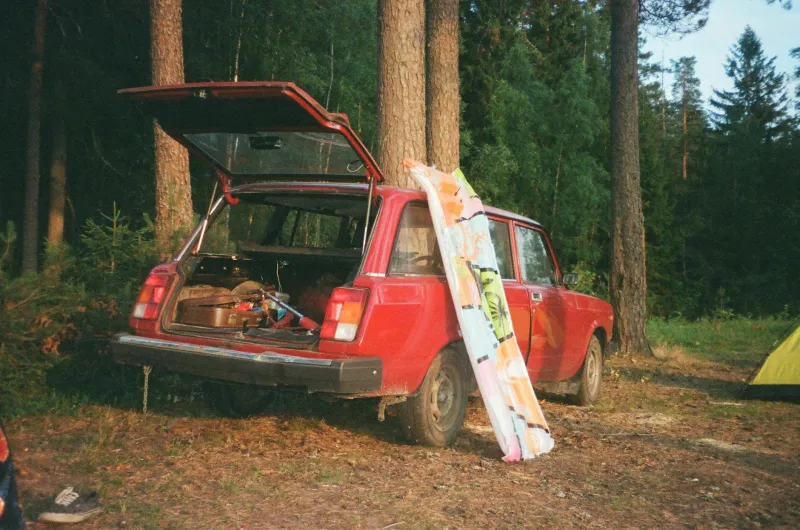
Picture this: It's 1967, and the Johnson family from Toledo is loading their wood-paneled station wagon for their annual summer camping trip. Dad has a hand-drawn map from his buddy at work, Mom's packed a cooler with ice that'll need replacing every two days, and the kids are arguing over who gets to carry the compass. Their destination? A campground three states away that may or may not still exist, reached by following landmarks like "turn left at the big oak tree" and "keep going until you see the lake."
Fast-forward to today, and the modern American family's "camping" experience looks radically different. GPS guides them directly to a reservation made months in advance through an app. Their destination offers WiFi passwords at check-in, electrical hookups for their devices, and bathroom facilities that rival most hotels. What we call camping today would have seemed like luxury resort living to previous generations.
When Disconnection Was the Whole Point
The camping trips of mid-century America weren't just vacations – they were exercises in self-reliance that entire families undertook together. Children learned to read topographical maps, identify edible plants, and understand that if something broke, you fixed it yourself or did without. There was no cell phone to call for help, no GPS to prevent getting lost, and certainly no way for the outside world to reach you once you hit the trail.
This isolation wasn't a bug in the system – it was the entire feature. Families disappeared into the wilderness for weeks at a time, emerging with stories of adventure, mishaps overcome through ingenuity, and a shared sense of accomplishment that came from surviving on their own skills.
Today's camping culture has flipped this equation entirely. Modern campers often seem more concerned with documenting their outdoor experience than actually having one. Social media feeds fill with perfectly curated campsite setups, complete with string lights, portable espresso makers, and enough technology to power a small office. The goal has shifted from escaping civilization to bringing all of civilization's comforts along for the ride.
The Coleman Stove Philosophy
The camping gear of previous generations tells its own story about American values and expectations. A Coleman stove, a canvas tent, and a cooler full of ice represented the height of camping luxury. These tools were built to last decades, passed down through families, and designed with the understanding that repairs would be made in the field with whatever materials were handy.
 Photo: Coleman stove, via cdn.apotheken-umschau.de
Modern camping gear, by contrast, often prioritizes convenience over durability. Instant pop-up tents replace the family ritual of learning to properly set up camp together. Portable generators ensure that no one has to experience the inconvenience of darkness or silence. Pre-packaged, dehydrated meals eliminate the need to learn outdoor cooking skills or plan meals around what could be preserved without refrigeration.
The Death of Genuine Inconvenience
Perhaps the most significant change in American camping culture is our relationship with discomfort and uncertainty. Earlier generations understood that part of the camping experience involved things going wrong – getting rained on, dealing with broken equipment, or discovering that the "shortcut" on the map led to a dead end.
These inconveniences weren't seen as failures of planning but as opportunities for problem-solving and family bonding. Children learned resilience by watching their parents calmly deal with a leaking tent at 2 AM or figure out how to cook dinner when the camp stove wouldn't light.
Today's outdoor adventures are increasingly engineered to eliminate these teachable moments. Campgrounds offer backup power, on-site stores for forgotten essentials, and staff available 24/7 to solve problems. While this certainly makes camping more accessible and comfortable, it also removes many of the character-building challenges that made these trips meaningful.
What We Lost in Translation
The transformation of American camping reflects broader cultural shifts toward safety, convenience, and constant connectivity. Modern families can certainly create meaningful outdoor experiences, but they're fundamentally different from what previous generations considered essential childhood education.
We've traded the confidence that comes from genuine self-reliance for the comfort of knowing help is always just a phone call away. We've exchanged the deep satisfaction of overcoming real challenges for the shallow pleasure of posting the perfect campfire photo.
The old-school camping trip was never really about the outdoors at all – it was about discovering what families could accomplish when stripped of their usual support systems and forced to rely on each other. That's a lesson that no amount of modern camping gear can replicate, and it's one that fewer American children experience with each passing summer.