One Bad Call, One Week of Arguments: The Glorious Imperfection of Human Officiating
There's a particular kind of Monday morning that older sports fans remember with something close to fondness. You'd walk into the office, grab your coffee, and before you'd even sat down, somebody across the room would already be mid-sentence about the call that ended Sunday's game. The argument would last all week. Nobody would settle it. That was the point.
Today, that same play gets reviewed in under ninety seconds, rendered in slow-motion from seventeen camera angles, and declared correct or incorrect by a guy in a booth nobody's ever seen. The argument ends before it really begins. And something — it's hard to name exactly what — disappears with it.
The Art Form Nobody Appreciated
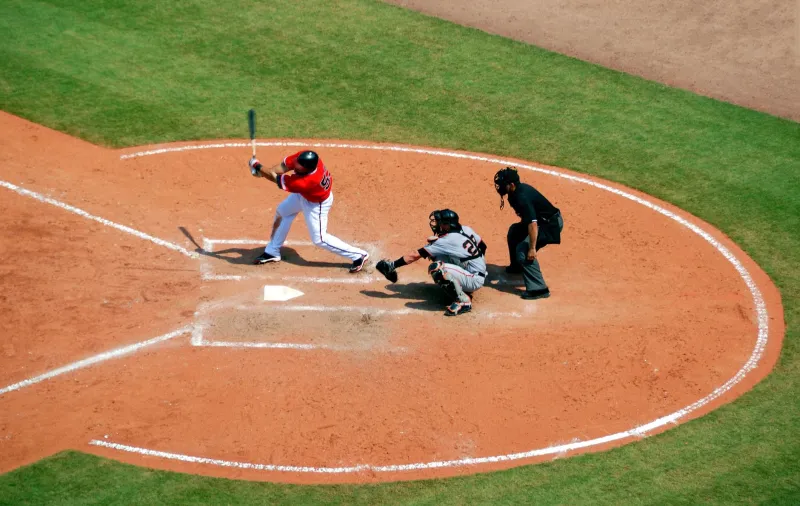
For most of American sports history, officiating was a craft practiced almost entirely on instinct and proximity. A home plate umpire had roughly four-tenths of a second to decide whether a 95-mile-per-hour fastball clipped the outside corner. An NBA referee tracking three players in motion simultaneously had to commit to a call the moment the whistle left his lips. An NFL line judge had to determine whether a receiver's second foot touched inbounds before momentum carried him out — and he had exactly one angle, his own eyes, and zero time to reconsider.
These weren't amateurs guessing. They were highly trained professionals with thousands of hours of experience, men who'd spent years developing an almost athletic sense for the game. But they were human. They had blind spots. They had bad days. They occasionally got it spectacularly, memorably, infuriatingly wrong.
And American sports culture was built, in no small part, around those moments.
The Call That Became a Story
Ask any baseball fan of a certain age about Don Denkinger. He'll know the name immediately. The 1985 World Series, Game 6, a blown call at first base that Kansas City Royals fans credit with turning the entire Series. Denkinger made his call, stood by it, and the Cardinals never recovered. That moment has been argued about for four decades. It became part of the game's mythology.
 Photo: Kansas City Royals, via logos-world.net
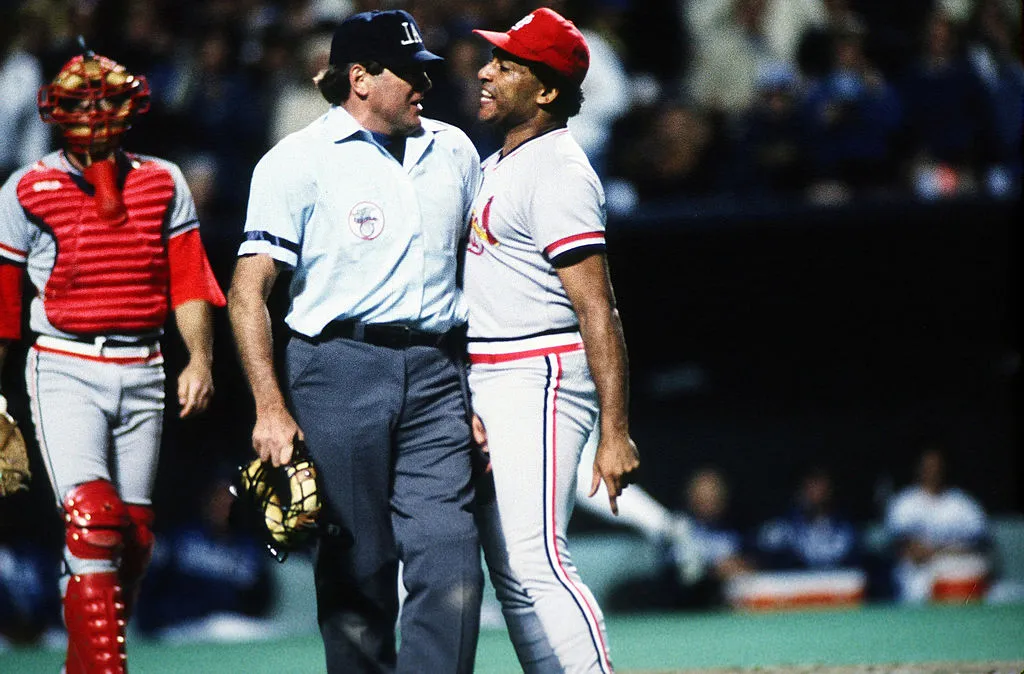 Photo: Don Denkinger, via nypost.com
That's the thing about a human error in a high-stakes moment — it becomes a story. It acquires texture and meaning. It gets passed down. Fans who weren't even born in 1985 know the Denkinger call because it was dramatic and human and unresolved in the way that only genuinely contested things can be.
When a video review overturns a call today, what you get is accuracy. What you don't get is mythology.
When the Machines Arrived
Instant replay crept into American sports gradually, beginning with NFL reviews in the mid-1980s and expanding across every major league over the following decades. Tennis introduced Hawk-Eye ball-tracking in the mid-2000s. MLB rolled out expanded video review in 2014. The NBA refined its replay center in New York, where officials in a control room can examine a play from angles that wouldn't have seemed possible to a 1970s fan.
The arguments in favor of technology are straightforward and largely correct. Accuracy matters. Outcomes should reflect what actually happened. A championship shouldn't turn on a referee's obstructed sightline. These are reasonable positions, and they've won the debate almost everywhere.
But the cost is real, even if it's harder to quantify.
The game slows down. Momentum evaporates during reviews. Managers and coaches now manage challenges as a strategic resource rather than expressing raw, genuine outrage. The spontaneous eruption — the manager charging out of the dugout, hat flying, face red — has been partially domesticated into a calculated decision about whether to burn a challenge in the fourth inning.
Something theatrical and honest has been traded for something accurate and procedural.
The Water Cooler Was the Point
It's easy to romanticize bad calls. Nobody who watched their team lose a playoff game on a missed foul actually wanted that outcome. The pain was real. The frustration was legitimate.
But the unresolvable argument that followed was a genuine social currency. Sports gave Americans a shared language, and the bad call was one of its most expressive words. It created conversation that crossed generations, connected strangers, and gave communities something to process together. The referee who blew the call wasn't just a villain — he was a catalyst.
The water cooler argument required uncertainty. It required the possibility that reasonable people could look at the same moment and see it differently, because nobody had a clean slow-motion frame to settle the matter. That ambiguity was frustrating in the moment and genuinely valuable in retrospect.
Today, most disputed plays are resolved before anyone gets home from the stadium. The argument is settled before it can breathe.
What Gets Lost in the Correction
This isn't really an argument against accuracy. It's an observation about what accuracy costs in a domain where human drama is the entire product.
Sports are not courts of law. They don't need to optimize purely for correct outcomes — they need to generate meaning, emotion, and shared experience. The imperfect human referee, standing six feet from the play, calling it as he saw it and living with the consequences, was part of that meaning-making machinery. His fallibility was a feature of the experience, not a bug to be patched.
The referee who got it wrong gave fans something to argue about for forty years. The replay system that overturns the call gives fans a correct outcome and a two-minute delay.
Both have value. But only one of them echoes.
The old-timers who still grumble about technology taking over the game aren't simply resistant to change. They're mourning something specific: the era when sports were settled by the human eye, the human judgment, and the glorious imperfection that made Monday morning worth showing up for.