Fountain Sodas, Layaway Lines, and Live Parakeets: The American Mall Was Never Really About Shopping
Photo: James English, CC BY 3.0, via Wikimedia Commons
There was a pet store in the Eastwood Mall in Niles, Ohio, that sold baby rabbits, tropical fish, and parakeets that would whistle at you when you walked past their cages. The smell hit you from twenty feet away — cedar chips, fish tanks, animal feed — and if you were eight years old in 1981, that smell meant Saturday. It meant your parents were somewhere nearby, probably at the layaway counter or the pharmacy, and you had maybe twenty minutes to press your nose against the glass tanks and dream.
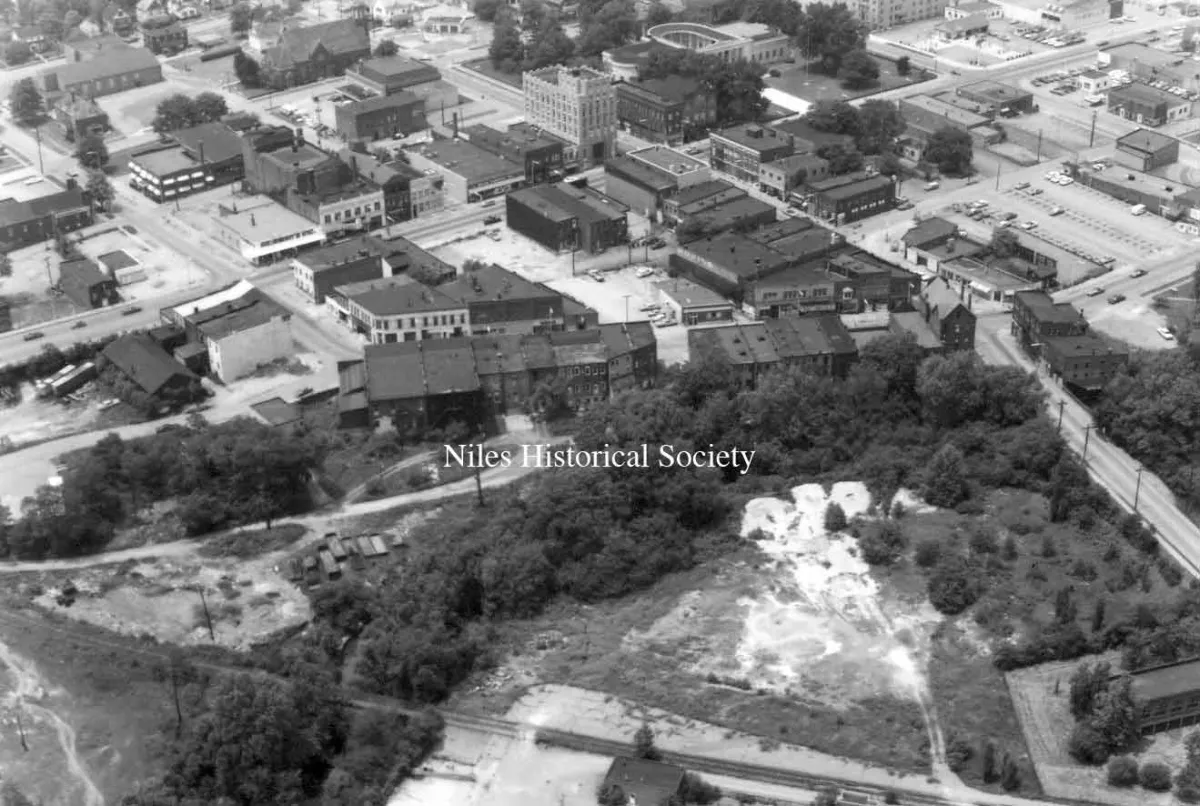 Photo: Niles, Ohio, via nileshistoricalsociety.org
 Photo: Eastwood Mall, via d1ef7ke0x2i9g8.cloudfront.net
That pet store is long gone. So is the layaway counter. The pharmacy closed when the anchor store did. And the mall itself is now half-empty, its food court echoing with the footsteps of power-walkers who use it as an indoor track because at least the roof still works.
This is the story of what the American mall actually was — and why losing it cost us more than we realized at the time.
More Than a Retail Building
The regional shopping mall reached its cultural peak somewhere between 1975 and 1990. During that window, it functioned as something genuinely rare in American suburban life: a shared physical space that served an entire cross-section of the community at once.
Consider what you could do in a mid-sized regional mall in, say, 1984. You could fill a prescription at the mall pharmacy, where the pharmacist was often the same person you'd seen behind the counter for fifteen years. You could put Christmas presents on layaway in August and make small payments every few weeks until they were paid off — a system that let working-class families participate in gift-giving without debt. You could get your hair cut, your glasses fitted, your portrait taken at the photo studio near the food court. You could open a savings account at the mall branch of your local bank.
And then, exhausted from all that, you could sit in the food court and eat a Sbarro slice while watching the entire social fabric of your town walk past.
The Architecture of Accidental Community
Urban planners and sociologists have a term for spaces that bring people together without requiring them to have a specific shared purpose: third places. Not home (first place), not work (second place), but somewhere in between — a diner, a barbershop, a park, a plaza. The regional mall, at its peak, was the great American third place of the late twentieth century.
What made it work wasn't intentional design so much as practical density. When you put a pharmacy next to a shoe store next to a sporting goods shop next to a sit-down restaurant, you create the conditions for overlap. The father buying sneakers for his daughter runs into his accountant buying allergy medication. The retired couple doing their weekly walk through the climate-controlled corridors stop to talk to the young family they recognize from church. The teenager working the Orange Julius counter becomes a familiar face to a hundred different households.
None of this was programmed. It just happened, reliably, because the mall was where everyone went.
Services That Anchored Real Life
The retail history of the American mall tends to focus on the anchor department stores — Sears, JCPenney, Montgomery Ward — and their slow-motion collapse. But the smaller service businesses were often the real connective tissue.
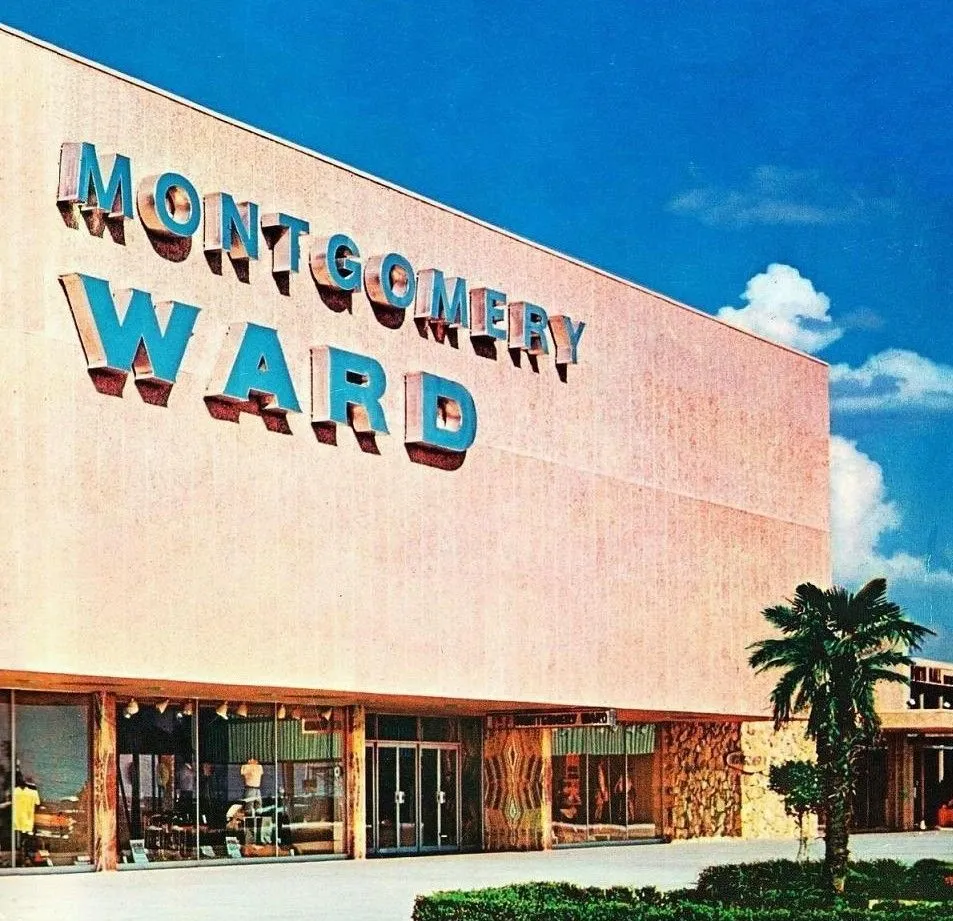 Photo: Montgomery Ward, via i.pinimg.com
The drive-through pharmacy inside or adjacent to many malls was genuinely convenient in an era before every drugstore had a drive-through lane. The optometrist who'd been in the same mall location since it opened in 1969 knew three generations of the same family's prescriptions. The portrait studio ran specials every Easter and back-to-school season, and those photos ended up on mantlepieces across the county.
Layaway, in particular, deserves its own chapter. It was a fundamentally dignified financial arrangement: you selected what you wanted, paid a small deposit, made regular payments, and picked it up when it was paid off. No interest. No credit check. No debt. It was a system designed for people who didn't have everything at once but could be trusted to follow through. The layaway counter was, in its quiet way, a statement of faith in working families.
When big-box retailers eliminated layaway in the 2000s and 2010s to cut administrative costs, they replaced it with store credit cards — a swap that looks like an upgrade but is actually a transfer of risk from the retailer to the customer.
What Amazon Couldn't Replicate
The standard explanation for the mall's decline is e-commerce, and it's not wrong. When you can order anything from your couch and have it arrive tomorrow, the basic value proposition of driving to a building and walking around changes dramatically.
But Amazon can ship you a blender. It cannot replicate the experience of running into your kid's third-grade teacher near the pretzel stand and having the kind of five-minute conversation that makes you feel like a person embedded in a community rather than a consumer node in a supply chain.
The mall's decline didn't just redistribute retail spending. It eliminated a category of spontaneous human encounter that suburban American life had come to depend on without fully recognizing it. When the anchors closed and the smaller stores followed and the food court tables sat empty, what disappeared wasn't just square footage. It was one of the last reliable places where strangers from the same town showed up in the same room and became, however briefly, neighbors.
The Roof Is Still There, But the Town Left
Some malls have reinvented themselves — medical clinics, community colleges, apartment conversions, indoor pickleball courts. A few have genuinely become interesting hybrid spaces. But most of the great regional malls of the 1970s and 1980s are either dead or dying, their parking lots cracked and their anchor bays dark.
What's striking, looking back, is how much we took for granted. The cedar-smelling pet store. The pharmacist who remembered your mother's medication. The layaway counter where a $12 deposit held a bicycle until December.
We didn't know we were living inside one of America's great democratic spaces. We just thought we were going to the mall.