The Little Booklet That Told America When to Plant, When to Pray, and When to Worry About Rain
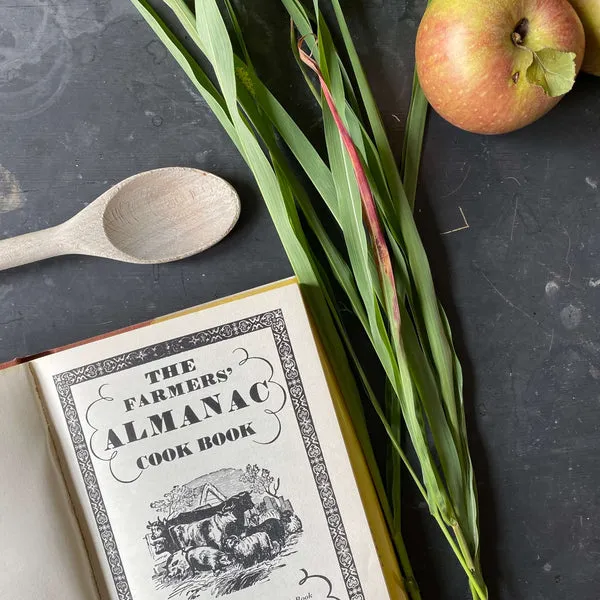
Photo: vintage Farmers Almanac booklet rural American farm kitchen historical, via shopinthevintagekitchen.com
Picture a farmhouse kitchen in rural Ohio, sometime in the 1920s. There's a wood stove, a long table, a window looking out over fields that need to be planted in the next three weeks. On a nail by the door hangs a small, well-thumbed booklet with a hole punched through the corner. Someone has underlined a passage about late frost dates. Someone else has penciled a note in the margin. The booklet is the Farmers' Almanac, and in this kitchen — and in tens of millions like it across the country — it is treated with something close to reverence.
The Old Farmer's Almanac has been published continuously since 1792, making it one of the oldest continuously published periodicals in the United States. The Farmers' Almanac, its main competitor, launched in 1818. Between them, these two publications shaped the rhythms of American agricultural life for well over a century. They were small, affordable, and absolutely crammed with information that people genuinely needed and had almost no other way to obtain.
 Photo: The Old Farmer's Almanac, via m.media-amazon.com
Everything You Needed to Know, in Sixty Pages
Open one of these almanacs from the early twentieth century and you'll be struck immediately by how much they managed to pack into such a modest format. Weather predictions for every month of the coming year, broken down by region. Planting calendars that told you the ideal dates to sow specific crops based on moon phases and historical frost patterns. Tide tables for coastal communities. Astronomical data — sunrise and sunset times, moon phases, eclipses — calculated with remarkable precision. Recipes. Home remedies. Livestock care advice. Historical trivia. Humor columns. Occasionally, poetry.
For a rural family in the pre-radio era, this was not a novelty item. It was a practical tool that informed real decisions with real financial consequences. Plant too early and a late frost destroys everything you've put in the ground. Harvest too late and autumn rains ruin the crop. The almanac didn't guarantee you'd get it right, but it gave you the best available framework for making an educated guess — and in farming, an educated guess was often the difference between a solvent year and a catastrophic one.
The Trust That Lived Inside That Pamphlet
What's genuinely striking, looking back, is the degree of trust Americans placed in these publications. The Old Farmer's Almanac famously claims an 80 percent accuracy rate for its long-range weather forecasts — a figure that has always been somewhat difficult to verify, but that didn't stop generations of readers from planning around those predictions as though they were gospel.
That trust wasn't naive. It was built over decades of usefulness. The almanac had earned its place on the farmhouse nail because, year after year, it delivered information that proved at least directionally correct often enough to matter. In a world with no television weather forecast, no National Weather Service radio broadcast, no smartphone app refreshing every fifteen minutes, the almanac was the only systematic attempt to look ahead that most rural Americans had access to.
There was also something deeper at work. The almanac represented accumulated wisdom — not just the work of a single editor, but a distillation of generations of observation, pattern recognition, and practical knowledge about how the natural world behaved. Farmers understood intuitively that this kind of knowledge was hard-won and worth respecting.
When the Information Landscape Changed Everything
The twentieth century dismantled the almanac's monopoly on agricultural information piece by piece. Radio brought real-time weather reports into farm kitchens by the 1930s. The cooperative extension services, backed by land-grant universities, began delivering science-based agricultural advice directly to farmers. Television added another layer. By the time the internet arrived, the almanac had already been reduced from essential tool to beloved tradition.
Today's farmer operates in an almost incomprehensibly different information environment. Satellite imagery can assess soil moisture across an entire county in minutes. GPS-guided tractors plant rows with millimeter precision. Agricultural apps pull in weather data from hyperlocal sensors and generate planting recommendations calibrated to specific field conditions. A farmer in Kansas can access more meteorological data before breakfast than a 1920s agronomist could have gathered in a year.
What the Pamphlet Knew That the Algorithm Doesn't
And yet something interesting has happened. Both the Old Farmer's Almanac and the Farmers' Almanac are still published. They still sell hundreds of thousands of copies every year. People still hang them on nails by doors, still underline passages, still argue about whether the prediction for February looks right.
Part of that is nostalgia, certainly. But part of it reflects something the information revolution hasn't fully replaced: the sense that knowledge distilled into a single, curated, human-scale format carries a different kind of weight than an infinite scroll of data. The almanac forced its editors to make choices — to decide what mattered, what was worth including, what a family needed to know to get through the year. That act of editorial judgment created something coherent and trustworthy in a way that a dashboard of real-time agricultural metrics doesn't quite replicate.
The farmers who relied on that little booklet weren't primitive or uninformed. They were doing exactly what we do today — finding the most reliable information source available and trusting it enough to act. The source has changed beyond recognition. The underlying need hasn't changed at all.