The Five-Thirty Morning Parade: When Your Neighborhood Ran on a Network of Familiar Faces
The Dawn Patrol
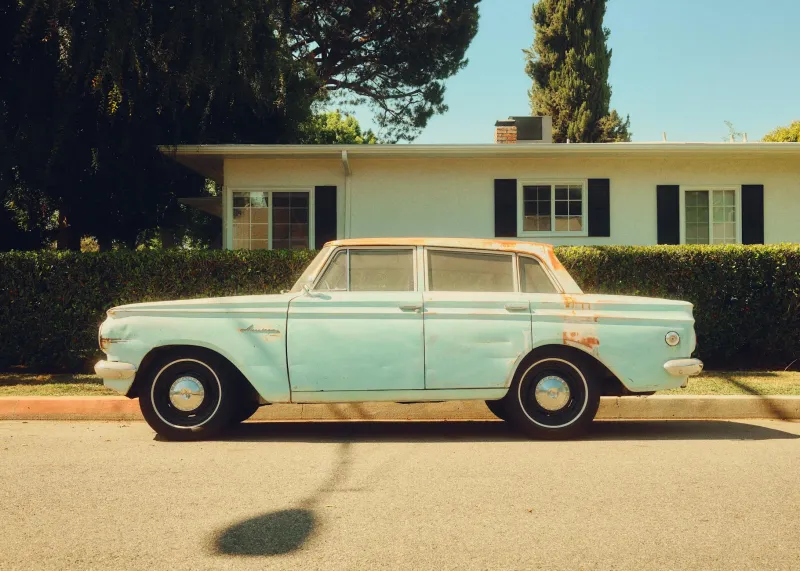
Before your alarm clock had a chance to ring, they were already making their rounds. The milkman's truck hummed down Maple Street at 5:15 AM sharp, bottles clinking softly in their wire carriers. Twenty minutes later, the iceman would arrive with his massive tongs and leather apron, hauling fifty-pound blocks up front steps. By six o'clock, the coal delivery truck rumbled through the alley, and Mr. Peterson would emerge from his cab knowing exactly which bins needed filling.
 Photo: Maple Street, via www.hsestudyguide.com
This was America's original gig economy—except it wasn't gigs at all. These were careers, routes, relationships built over decades of showing up before sunrise to keep neighborhoods functioning.
More Than Delivery, Less Than Strangers
The milkman didn't just drop off dairy products. He knew Mrs. Henderson took cream in her coffee but switched to skim when her doctor mentioned her cholesterol. He'd leave extra chocolate milk on report card days and quietly skip deliveries when families went out of town—no app required, just observation and care.
 Photo: Mrs. Henderson, via www.chinatourguide.com
The iceman understood which households had parties planned (extra ice, naturally) and which elderly customers needed their blocks carried all the way to the kitchen. Coal delivery meant knowing furnace schedules, basement layouts, and which families stretched their heating budget by ordering smaller loads more frequently.
These weren't anonymous transactions. They were ongoing conversations conducted through practical needs, seasonal rhythms, and shared neighborhood knowledge that accumulated over years.
The Invisible Social Network
What we lost wasn't just convenient home delivery—it was a form of community surveillance that actually worked. These morning workers served as informal neighborhood watch, wellness check, and communication network rolled into one.
They noticed when newspapers piled up, when usual routines changed, when new babies arrived or elderly residents needed extra help. Information flowed naturally: "The Johnsons mentioned they're looking for a babysitter" or "Mrs. Murphy's been asking about piano lessons for her daughter."
This human infrastructure created connections that crossed economic lines. The same milkman served the doctor's house and the factory worker's apartment, creating threads of familiarity in communities that might otherwise remain stratified.
The Economics of Knowing Your Customers
These delivery routes operated on trust and relationship rather than surge pricing and ratings systems. Customers paid monthly, sometimes seasonally. Credit was extended based on character rather than credit scores. The milkman might carry a family through a rough patch, knowing they'd settle up when Dad got back on his feet.
This system worked because everyone was invested in the long term. Delivery workers built routes over decades, passing them down to sons or selling them to trusted colleagues. Customers weren't just transactions—they were the foundation of a sustainable livelihood.
Today's Doorstep Drop-Off Culture
Now we have Amazon packages appearing on porches like magic, grocery deliveries from drivers we'll never see again, and meal kits that arrive with military precision but zero human connection. We've gained convenience and lost community.
The modern delivery worker—when we see them at all—operates under entirely different pressures. Speed over relationship. Efficiency over familiarity. GPS navigation instead of neighborhood knowledge accumulated over years.
We track our packages in real-time but couldn't pick our delivery driver out of a lineup. We rate our service experience but never learn our driver's name.
What Disappeared in the Efficiency Revolution
The shift from relationship-based delivery to app-mediated service reflects broader changes in how Americans connect with their immediate environment. We traded the morning parade of familiar faces for the convenience of never having to interact with another human being to get what we need.
This wasn't just about milk, ice, and coal. It was about maintaining daily contact with people who had a stake in the neighborhood's wellbeing. It was about economic relationships that prioritized consistency over optimization.
The five-thirty morning parade created a rhythm that connected individual households to something larger—a network of mutual responsibility that operated through practical necessity rather than social media algorithms.
The Cost of Convenience
Today's delivery ecosystem prioritizes speed, selection, and seamless payment processing. We can get almost anything delivered within hours, often without human contact. But we've lost something harder to quantify: the daily reminder that we're part of a community where people know our routines, notice our absence, and care about our wellbeing.
The milkman's route wasn't just about dairy distribution. It was about maintaining the social fabric that made neighborhoods feel like neighborhoods rather than collections of individual consumers.
We gained the ability to order everything from our phones. We lost the morning parade that reminded us we weren't living alone in the world.