The Fastest Message You Ever Sent Is the One Nobody Read
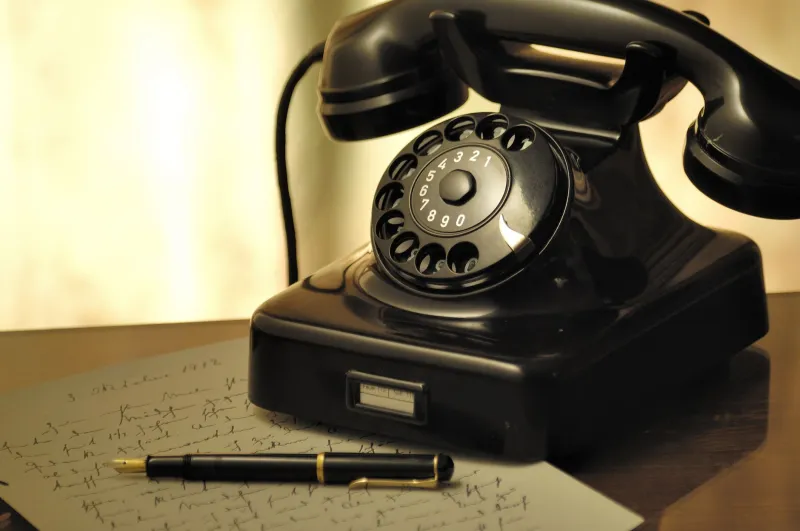
There's a letter sitting in a museum in Washington, D.C. that traveled from New York to Philadelphia in under six hours. It was carried by a man on horseback in 1790. No electricity. No satellites. No fiber optic cable buried under the ocean floor. Just a rider, a road, and a genuine sense of urgency.
Now think about the last important email you sent. The one where you actually needed an answer. How long did you wait?
We live in the age of instantaneous communication, and somehow, we've never felt more ignored.
When a Letter Actually Meant Something
For most of American history, sending a message required real effort. You had to sit down, find paper, compose your thoughts, write them out by hand, seal the envelope, and physically get it somewhere. That friction wasn't a flaw in the system. It was a feature.
Because the act of writing a letter told the recipient something before they even read a word: this person thought you were worth the trouble.
By the mid-20th century, the U.S. Postal Service had turned that effort into something remarkably reliable. Overnight delivery within a metro area was standard. Businesses ran on it. Lawyers exchanged contracts through it. Families maintained relationships across state lines using nothing but stamps and handwriting. And when a letter arrived, people read it. Carefully. Often the same day it showed up.
Response times were measured in days, not hours — but the responses were real, considered, and complete.
The Email Revolution That Wasn't
When email arrived in the consumer mainstream during the 1990s, the promise was simple: all the benefits of written communication, delivered instantly. No postage. No waiting. No lost envelopes.
For a brief, golden moment around 1997, that's exactly what it was. You sent an email. The person on the other end — thrilled by the novelty of the whole thing — wrote back within the hour. It felt like magic.
Then came the volume.
The average American office worker today receives somewhere north of 120 emails per day. That's not a communication system anymore. That's a flood. And when you're drowning, you don't carefully read every piece of debris floating past you — you triage, skim, and defer. Important messages get buried under newsletters, automated notifications, reply-all chains about the office birthday cake, and promotional offers from companies you bought something from once in 2019.
The speed of delivery went up. The likelihood of genuine attention went down.
Three Seconds Versus Three Days
Here's the paradox that doesn't get talked about enough: a letter mailed in 1965 had a better chance of receiving a thoughtful, timely response than an email sent in 2024.
Not because people were smarter or more conscientious back then. But because the channel wasn't cluttered. When a physical letter arrived, it was one of maybe three or four pieces of mail that day. It had a physical presence. You held it. You had to make a decision about it — read it now, or set it aside and feel vaguely guilty about it until you did.
Today, your urgent email competes with 119 other items for a few seconds of fragmented attention. It sits in a list. It looks exactly like the email about the expiring rewards points. The medium has become its own worst enemy.
Texting was supposed to fix this. And for casual conversation, it sort of did. But the same inflation happened there too. Group chats. Work Slack channels. Instagram DMs. Notifications stacked on notifications. The human brain wasn't designed to process this kind of volume, and it responds the only way it can — by filtering out most of it.
What We Actually Lost
The real casualty here isn't speed. It's presence.
When your grandfather sat down to write a letter, he wasn't simultaneously checking three other things. He wasn't halfway through a response when a notification pulled him somewhere else. The act of writing demanded his full attention, and the act of reading demanded yours.
Phone calls worked the same way. When someone called your house in 1978, you answered it. You didn't know who it was. You gave them your complete attention for the duration of the conversation, and when you hung up, something had actually been communicated — a decision made, a plan confirmed, a relationship maintained.
Today, most people let unknown numbers go to voicemail. Most voicemails go unlistened to. Most unlistened voicemails eventually get deleted. And somewhere in that chain, whatever needed to happen didn't.
Speed Isn't the Same as Efficiency
This isn't a nostalgia argument for going back to quill pens and pony express riders. Nobody wants that. But there's something worth sitting with in the realization that faster tools don't automatically produce faster outcomes.
The companies that figured this out early — that genuine communication requires intention, not just infrastructure — started doing things like scheduled response windows, communication-free focus hours, and deliberately limiting the number of channels their teams operate on. They're essentially recreating the conditions of the pre-digital office: fewer messages, more meaning.
The rest of us are still reading emails on our phones at 11pm, wondering why we feel so disconnected.
Somewhere, a letter is sitting in a museum that traveled 95 miles in six hours on horseback. The man who received it read every word. He replied the next morning.
We could learn something from that.