Cannonball Democracy: When Every Kid in Town Met at the Same Watering Hole
The Summer Republic
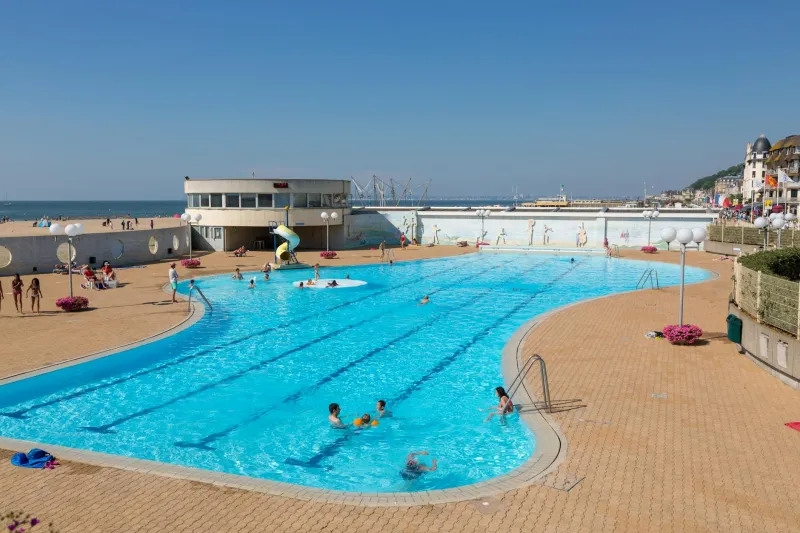
Every American town had one: the swimming hole where summer democracy played out in chlorinated water and childhood chaos. Maybe it was the municipal pool downtown, the old quarry past the railroad tracks, or the creek bend where someone's grandfather had built a rope swing decades earlier. These weren't just places to cool off—they were America's most successful integration experiments, conducted one cannonball at a time.
From June through August, social hierarchies dissolved in the water. The banker's daughter and the mechanic's son competed in the same diving contests. Teenagers taught younger kids how to do proper belly flops. Mothers from different neighborhoods shared sunscreen and kept watch over each other's children with the casual authority of shared summer responsibility.
The Great Equalizer
Public swimming created a unique social space where economic differences became temporarily irrelevant. Everyone wore the same uniform: swimsuits and summer skin. The kid with the best diving technique earned respect regardless of what his father did for work or which side of town he lived on.
Municipal pools operated on simple principles: pay your quarter, follow the rules, and everyone gets equal access to the same water. Lifeguards—often local high school students—enforced safety and fairness with the kind of practical authority that adults respected and kids understood.
These spaces fostered relationships that crossed the invisible boundaries that otherwise divided communities. Friendships formed in the shallow end often lasted through the school year, creating social connections that might never have developed in more structured environments.
The Informal Supervision Network
The genius of public swimming wasn't just the shared space—it was the collective responsibility that came with it. Adults didn't need formal training or background checks to help maintain order and safety. They operated on the understanding that all the children were, in some sense, everyone's children.
Mrs. Patterson might scold any kid who ran on the pool deck, regardless of whether she knew their parents. Mr. Rodriguez would fish struggling swimmers out of the deep end and deliver impromptu swimming lessons to anyone who asked. The teenager working concessions would let kids know when their lips were turning blue and it was time to warm up in the sun.
This distributed supervision system worked because everyone understood the rules and everyone had permission to enforce them. Parents trusted other adults to care for their children because they operated within a shared framework of community standards.
The Rituals of Summer
Public swimming pools developed their own seasonal rhythms and traditions. Opening day brought crowds of winter-pale kids eager to reclaim their summer kingdom. Swimming lessons happened in organized chaos, with instructors somehow managing to teach dozens of children simultaneously. Evening sessions drew teenagers who turned the pool into their social headquarters.
Local swimming holes had even deeper traditions. The rope swing that required a specific technique passed down through generations of local kids. The diving rock that served as both launching pad and social throne. The unwritten rules about sharing space and taking turns that somehow maintained order without adult intervention.
These rituals created belonging and continuity. Kids grew up expecting their place in the summer swimming community, and adults remembered their own childhood summers when they watched the next generation discover the same joys.
When Liability Killed Community
The transformation began quietly in the 1980s and accelerated through the following decades. Insurance costs skyrocketed. Liability concerns multiplied. Safety regulations proliferated. Many municipal pools couldn't afford the legal exposure and simply closed.
Private pools began appearing in backyards across suburbia, offering families complete control over their aquatic experience—and complete isolation from the broader community. Swimming became a private amenity rather than a public good.
The swimming holes that survived faced new restrictions: posted warnings about swimming at your own risk, barriers to prevent access, and sometimes complete closure due to environmental concerns or safety liability.
The Privatization of Summer
Today's families with means invest in private pool memberships, backyard installations, or exclusive swim clubs where children interact primarily with others from similar economic backgrounds. Swimming lessons happen in controlled environments with certified instructors and detailed liability waivers.
We've gained safety, consistency, and convenience. Children learn proper stroke technique in heated, chemically balanced water under professional supervision. Parents don't worry about unknown adults disciplining their children or unfamiliar kids influencing their summer experience.
But we've lost the democratic chaos that once made summer swimming a community-building experience rather than a private amenity.
The End of Shared Summer
The disappearance of public swimming reflects broader changes in how Americans think about shared space, collective responsibility, and childhood independence. We've moved from a model where communities collectively supervised children in shared spaces to one where parents manage individual experiences in private settings.
Modern children might have access to better swimming instruction and safer facilities, but they're missing the experience of navigating social dynamics across economic and cultural lines. They're learning to swim, but not learning to be part of a larger community that extends beyond their immediate family and social class.
What Sank With the Swimming Holes
When America's public swimming culture disappeared, we lost more than recreational facilities. We lost spaces where democratic values played out in daily practice, where children learned that community membership came with both privileges and responsibilities.
The old swimming holes weren't perfect—they sometimes reflected and reinforced community divisions rather than transcending them. But at their best, they demonstrated that shared public goods could create shared public benefits that no private alternative could replicate.
Today's children might be safer swimmers, but they're growing up in a world where summer community happens within carefully curated social boundaries rather than the gloriously chaotic democracy of the old swimming hole, where the only requirement for membership was showing up with a towel and a willingness to get wet.