When Broken Meant Fixable: How America Lost Its Repair-First Mentality
The Man Behind the Counter
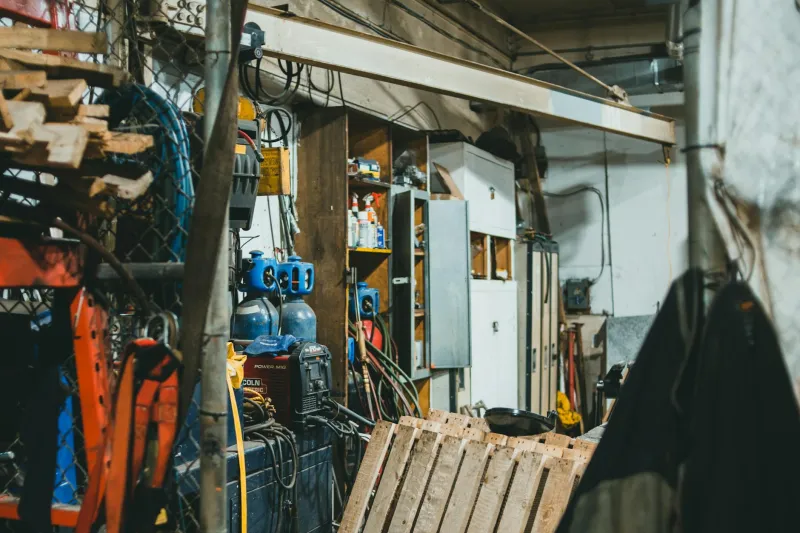
Walk into Kowalski's Hardware on Chicago's North Side in 1978, and you'd find Eddie behind the counter, sleeves rolled up, ready to solve whatever problem walked through his door. A customer would describe a wobbly table leg or a dripping faucet, and Eddie would nod knowingly, disappearing into the maze of narrow aisles to return with exactly the right washer, screw, or bracket. More importantly, he'd explain how to use it.
"You don't need a whole new faucet," Eddie would say, holding up a 30-cent rubber gasket. "This little guy will stop that drip and save you sixty bucks."
This wasn't exceptional service—it was standard across America. Hardware stores were community problem-solving centers, staffed by people who viewed repair as the obvious first option. Replacement was what you did when fixing truly wasn't possible.
The Default Response to Broken
For most of American history, when something broke, you fixed it. This wasn't environmental consciousness or frugality—it was practical necessity. A washing machine cost several weeks' wages. A television represented a major household investment. You didn't throw away a $300 appliance because one part failed; you found someone who could make it work again.
Neighborhoods had repair shops for everything: shoe repair, television repair, small appliance repair, watch repair. The Yellow Pages were thick with listings for people who specialized in bringing broken things back to life. Your grandfather's toolshed was stocked with spare parts, salvaged screws, and mysterious widgets saved "just in case."
This repair culture created a different relationship with possessions. People knew their belongings intimately—which drawer stuck, how to jiggle the handle just right, where to tap the radio to clear the static. Objects weren't anonymous purchases; they were familiar tools with quirks and histories.
When Throwing Away Became Cheaper
The shift began quietly in the 1980s and accelerated through the 1990s. Manufacturing moved overseas, driving down the cost of new goods while repair became relatively more expensive. A VCR that cost $400 new might require $150 in labor to fix—suddenly replacement seemed reasonable.
Big-box retailers changed the equation further. Home Depot and Lowe's offered vast selection and competitive prices, but their teenage employees couldn't match Eddie's decades of experience. The personal relationship between customer and hardware expert began to fade.
Meanwhile, manufacturers discovered planned obsolescence wasn't just about lightbulbs. Why sell someone a toaster that lasts twenty years when you could sell them four toasters over the same period? Products became harder to repair by design—sealed cases, proprietary screws, integrated circuits that couldn't be replaced individually.
The Amazon Effect
The final blow came with online shopping and next-day delivery. When your coffee maker breaks on Tuesday morning, you can have a replacement by Wednesday afternoon. The friction of repair—finding the right part, learning the procedure, spending a weekend on the project—suddenly seemed absurd when Amazon offered instant gratification.
This convenience came with hidden costs. Americans now generate over 6 million tons of electronic waste annually. The average household replaces perfectly functional items simply because newer versions exist. We've become a nation of upgraders rather than fixers.
What We Lost When Eddie Retired
When neighborhood hardware stores closed, we lost more than convenient access to nuts and bolts. We lost institutional knowledge—the accumulated wisdom of generations of fixers and tinkerers. We lost the confidence that comes from understanding how things work. We lost the satisfaction of solving problems with our hands.
Modern consumers often feel helpless when faced with broken appliances. The idea of opening up a device and poking around inside seems foreign, even dangerous. We've outsourced our mechanical competence to the manufacturer, and when they say "replace," we comply.
The New Repair Movement
Interestingly, repair culture is showing signs of revival among younger Americans. YouTube has become the Eddie Kowalski of the internet age, offering detailed tutorials for fixing everything from smartphones to washing machines. "Right to repair" legislation is gaining momentum, forcing manufacturers to make replacement parts and repair manuals available.
Maker spaces and repair cafes are popping up in cities across America, offering tools and expertise to people who want to fix rather than replace. These spaces recreate some of what we lost—community knowledge sharing, the satisfaction of successful repair, the relationships built around solving problems together.
The True Cost of Convenience
Our throwaway culture offers undeniable convenience, but it comes with costs we're only beginning to calculate. Beyond environmental waste, we've lost valuable skills, weakened community connections, and created a psychological dependence on constant consumption.
Perhaps most significantly, we've lost the deep satisfaction that comes from making something work again—that moment when a careful repair brings a beloved object back to life. In a world of planned obsolescence and instant replacement, that feeling has become increasingly rare.
The hardware store that knew your name represented more than retail convenience. It embodied a fundamentally different relationship with the material world—one where broken didn't mean worthless, where problems had solutions, and where the default response to malfunction was curiosity rather than disposal.