The Back-of-the-Store Secret That Taught America How to Want Something Properly
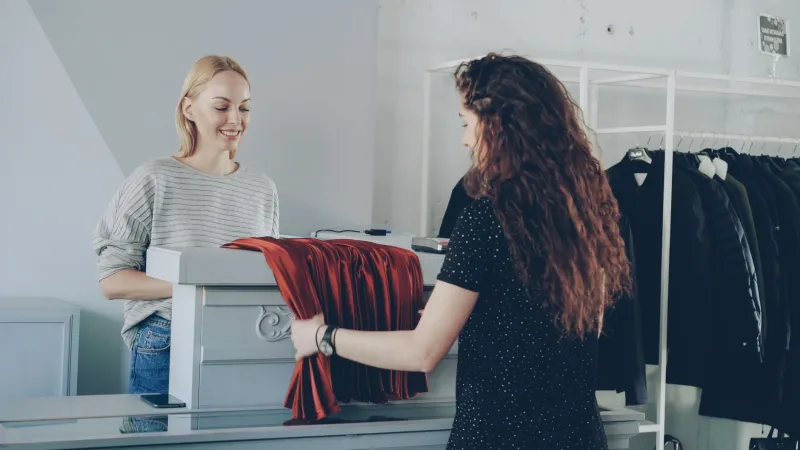
It happened the same way in households across the country, every autumn, for decades. A mother — usually the mother, though sometimes both parents — would make a special trip to the department store sometime in October, maybe early November. She wasn't there to browse. She had a list, and she knew what was on it. She'd walk past the main floor displays, past the registers, all the way to the back of the store, where a counter sat staffed by a clerk who dealt not in impulse but in intention.
She'd pick out a bicycle, a doll set, a pair of winter boots. The clerk would fill out a form, take a deposit — sometimes as little as ten percent — and the items would disappear into a storage room. Then, every week or every two weeks, she'd come back. Sometimes with the kids in tow, sometimes alone. She'd hand over another payment, the clerk would note it on the card, and the items would stay safely in the back, waiting. By mid-December, when the balance hit zero, she'd walk out with everything fully paid for, wrapped and ready. No credit card statement arriving in January. No interest charges. No debt hangover stretching into spring.
That was layaway. And for a significant portion of working-class America, it was the only way Christmas happened at all.
The Counter Nobody Talked About
Layaway never had great marketing. It wasn't a flashy financial product with a catchy name and a celebrity spokesperson. It was, by design, the opposite of exciting — a system built entirely around the unglamorous virtues of patience and discipline. You had to know what you wanted months before you could have it. You had to show up repeatedly to make payments. You had to resist the temptation to simply charge it and deal with the consequences later.
Retailers first popularized layaway during the Great Depression, when extending credit to customers was financially risky and most families had no access to credit cards anyway. The system made practical sense for everyone: the store secured a committed customer and held onto the merchandise, the customer secured the items before they sold out and spread the cost over time. Nobody got rich off layaway. That was somewhat the point.
At its peak, layaway counters were a standard feature of virtually every major American retailer. Kmart, Sears, Walmart, Target, Montgomery Ward, and hundreds of regional department store chains all operated them. In lower-income communities especially, the layaway counter was less a retail feature than a community institution — a place where working families exercised a kind of financial dignity that the mainstream credit system often denied them.
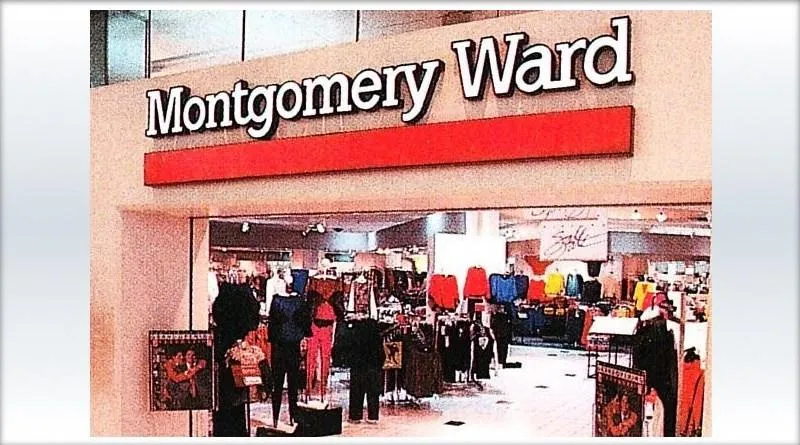 Photo: Montgomery Ward, via i.redd.it
What the System Actually Taught
The economics of layaway were straightforward, but the cultural lesson it delivered was something more significant. Layaway institutionalized delayed gratification at the point of purchase, which is an unusual thing for a retail environment to do. Every other element of a department store was engineered to accelerate the decision to buy — the displays, the sales, the checkout lanes positioned to catch impulse purchases. The layaway counter ran entirely counter to that logic. It slowed everything down on purpose.
Children who watched their parents use layaway absorbed something important about how adults related to money and desire. Wanting something wasn't enough. Having the money wasn't even enough if the timing wasn't right. The right approach was to identify what you wanted, commit to it, and then earn it incrementally over time. That's not a complicated financial philosophy, but it's one that required a specific kind of infrastructure to reinforce — and the layaway counter provided exactly that.
There was also something meaningful in the physical act of returning to the store week after week. Each visit was a small recommitment to the plan. The clerk who recognized you, noted your payment, and confirmed the balance was a form of accountability that no app has yet successfully replicated.
How Buy-Now-Pay-Later Replaced a Patient Ritual
Walmart eliminated its layaway program in 2006, citing the administrative costs and the availability of credit cards as alternatives. Most other major retailers followed over the next decade. The timing was not coincidental — the mid-2000s were the height of America's credit expansion, a period when borrowing felt costless and the future seemed like a problem for a different version of yourself.
What replaced layaway wasn't just credit cards. It was an entire ecosystem designed to eliminate every moment of friction between wanting something and owning it. One-click purchasing. Store credit cards approved at the register in ninety seconds. And more recently, the buy-now-pay-later apps — Klarna, Afterpay, Affirm — that have turned installment debt into something that feels almost identical to layaway but runs in the exact opposite direction. With BNPL, you take the item home immediately and pay later. The discipline is optional. The debt is automatic.
American consumer debt tells the story clearly. Total household debt in the US exceeded $17 trillion in 2023. Buy-now-pay-later usage has grown dramatically among younger consumers, many of whom are using it for everyday purchases, not just large planned ones. The layaway model — save first, acquire second — has been almost entirely inverted.
Something Worth Waiting For
A handful of retailers have quietly brought layaway back in recent years, mostly during the holiday season, mostly marketed to the same working-class families who used it the first time around. Walmart reinstated a version of it. Burlington and other off-price retailers have kept it running. The demand, it turns out, never entirely went away.
What those customers are choosing, when they choose layaway over a store credit card, is something more than a payment method. They're choosing a particular relationship with their own desire — one that says the thing you want is worth the discipline of waiting for it. That's an idea the American retail industry spent forty years engineering out of the shopping experience. The fact that people still seek it out suggests it met a need that one-click checkout never quite managed to replace.