The knock at the door came at any hour—sometimes before dawn, often after midnight. But when Dr. Patterson's black sedan pulled into the driveway, relief washed over worried families. The doctor had arrived, black bag in hand, ready to bring healing directly into American homes.
 Photo: Dr. Patterson, via hudecdental.com
For most of the 20th century, this scene played out millions of times across the United States. House calls weren't a luxury service or emergency intervention—they were simply how medicine worked. Doctors didn't wait for patients to come to them; they went where sickness lived, treating people in the comfort and context of their own homes.
Medicine in Your Living Room
A house call in 1950 began the moment the physician crossed your threshold. Dr. Williams would hang his coat on your hall tree, accept a cup of coffee from your wife, and ask about your family while washing his hands in your kitchen sink. The examination might happen in your bedroom, on your sofa, or at your dining room table—wherever you felt most comfortable.
This wasn't just convenience; it was comprehensive care. The doctor could observe how you actually lived. Was your home well-heated? Did you have running water? Were there signs of poverty, stress, or family dysfunction that might affect your health? A glance at your medicine cabinet, your refrigerator, or your bookshelf told stories that no clinic questionnaire could capture.
Contrast this with today's healthcare experience. The average doctor's appointment lasts 18 minutes—barely enough time for pleasantries, let alone genuine conversation. Patients sit in sterile examination rooms, wearing paper gowns, answering rapid-fire questions while doctors type notes into computers. The human context of illness—your home, your family, your daily struggles—remains invisible.
The Black Bag and What It Meant
Every family doctor carried the same essential tool: a worn leather medical bag packed with instruments, medications, and hope. Inside might be a stethoscope, thermometer, blood pressure cuff, syringes, bandages, and small bottles of common medicines. More importantly, it carried the doctor's complete attention and time.
Dr. Margaret Chen, who practiced in rural Ohio during the 1960s, recalls her bag containing everything from antibiotics to birthing supplies. "I delivered babies on kitchen tables, stitched cuts by lamplight, and held dying patients' hands in their own beds," she remembers. "Medicine was personal because it happened in personal spaces."
 Photo: Dr. Margaret Chen, via yt3.googleusercontent.com
Today's medical toolkit is infinitely more sophisticated but requires institutional support. MRI machines, electronic health records, and specialized laboratories have revolutionized diagnosis and treatment. However, this technology anchors medicine to specific locations, making house calls nearly impossible and often illegal due to regulatory requirements.
When Doctors Knew Your Story
House call physicians didn't just treat diseases—they treated families. Dr. Anderson might deliver your baby, set your son's broken arm, and later comfort you through your father's final illness. This continuity created relationships that spanned generations, with doctors becoming trusted family advisors on matters far beyond medicine.
These physicians knew that Mrs. Patterson's arthritis flared when she worried about money, that little Tommy's asthma worsened in his grandmother's dusty attic bedroom, and that Mr. Johnson's heart condition improved when his daughter visited. They understood illness as inseparable from life circumstances.
Modern medicine has largely abandoned this holistic approach. Patients now navigate networks of specialists, each focused on specific body systems rather than whole people. Primary care physicians, overwhelmed by patient loads and administrative demands, struggle to maintain meaningful relationships. The average family doctor now manages over 2,000 patients—making intimate knowledge of each person's life story impossible.
The Economics of Caring
House calls made economic sense in an era when doctors were small business owners, not employees of healthcare corporations. Physicians set their own fees, often accepting payment in goods or services when cash was scarce. Dr. Thompson might accept a dozen eggs for treating a child's fever or fresh vegetables for delivering a baby.
This informal economy allowed medicine to serve everyone, regardless of ability to pay. Doctors understood that healthy communities benefited everyone, making charity care an investment in collective wellbeing rather than a financial burden.
Today's healthcare system operates on fundamentally different principles. Insurance companies, hospital networks, and government regulations determine how medicine is practiced and priced. While this system provides important protections and standards, it has also eliminated the flexibility that once made house calls economically viable.
The Decline of the House Call
Several forces converged to end the house call era. Suburban sprawl made traveling between patients time-consuming and expensive. New medical technologies required specialized facilities that couldn't be transported. Insurance companies began favoring office-based care that could be more easily standardized and monitored.
Most significantly, medicine became increasingly complex. Treating a heart attack now requires cardiac catheterization labs, not bedside manner. Cancer treatment demands teams of specialists and million-dollar equipment, not a doctor's intuition and black bag remedies.
By 1980, house calls had virtually disappeared from American medicine. Today, less than 1% of medical encounters happen in patients' homes, and most of those involve specialized hospice or home health services.
What Telemedicine Promises and Can't Deliver
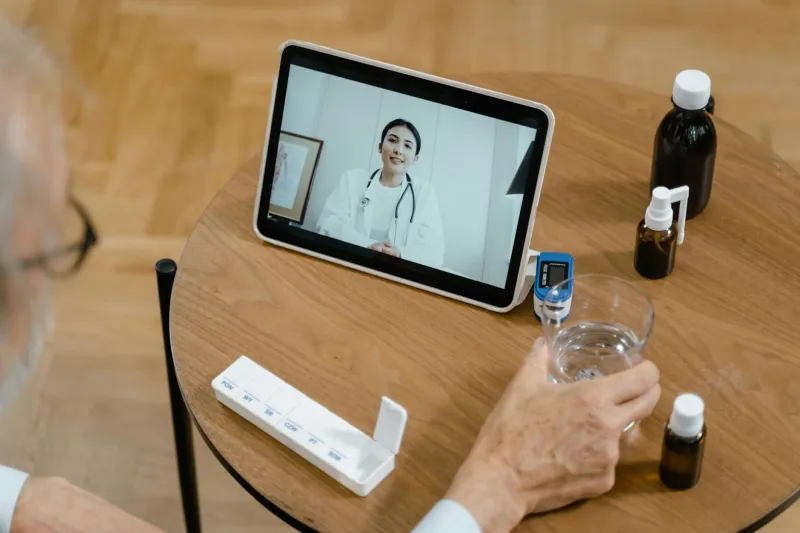
The COVID-19 pandemic sparked renewed interest in home-based care through telemedicine. Video consultations allowed doctors to "visit" patients safely during lockdowns, and many predicted this would revolutionize healthcare delivery.
Telemedicine offers genuine advantages: convenience, reduced travel time, and access for patients in remote areas. Doctors can see patients more frequently and catch problems earlier. The technology works well for routine check-ups, medication adjustments, and mental health counseling.
However, virtual visits can't replicate the intimacy and insight of true house calls. A doctor can't assess your home environment through a laptop screen or notice the prescription bottles you've hidden in shame. The physical examination—touching, listening, observing—remains irreplaceable for many medical conditions.
The Human Cost of Progress
Modern medicine saves lives that would have been lost in the house call era. Emergency rooms, intensive care units, and surgical suites perform daily miracles that no black bag could match. Patients receive evidence-based treatments from highly trained specialists using the latest technology.
Yet something essential was lost when doctors stopped crossing our thresholds. Medicine became more scientific but less human, more effective but less personal. We gained precision but lost the comfort of being cared for in our own spaces, surrounded by our own things, by people who knew our stories.
The house call represented medicine at its most human scale—one person caring for another within the context of real life, real homes, and real relationships. In our rush toward technological sophistication, we may have forgotten that healing often happens not in hospitals, but in the places where people actually live.