The Milkman's Route: How America Ditched Convenience, Then Spent Decades Reinventing It
The Milkman's Route: How America Ditched Convenience, Then Spent Decades Reinventing It
On any given morning in 1950s America, a milkman would arrive before dawn. He knew which houses took whole milk, which wanted skim, who needed an extra pint on Thursdays for the bridge club. He might leave butter, cream, or eggs depending on standing orders. He'd collect payment, leave a receipt, and move to the next house. By the time families woke up, fresh milk was already cold in the insulated box on the porch.
This wasn't a luxury service. It was normal. Standard. Assumed.
The milkman was just one part of an entire delivery economy that Americans took for granted. The iceman came twice a week to refill the icebox before electric refrigerators made him obsolete. The bread man delivered fresh loaves. The grocer's boy brought bags of vegetables and staples. The laundry service picked up dirty clothes and returned them pressed and folded. For many American households, shopping was something that happened at your door, not something you had to go out and do.
Then came the supermarket. And America decided that convenience meant going to the store yourself.
The Rise and Fall of Home Delivery
Home delivery wasn't invented in the 20th century—it was how commerce worked for centuries. In the 1800s and early 1900s, before cars were common, before supermarkets existed, before most families had reliable refrigeration, regular deliveries were essential infrastructure. A milkman, a baker, a butcher, a vegetable seller—they came to you.
But there was something else happening too. These delivery routes created relationships. The milkman knew your family. He knew if someone was sick, if there'd been a death, if money was tight. He extended credit when needed. He was part of the neighborhood fabric. Delivering milk wasn't just a transaction; it was a social connection.
The economics made sense at the time. Horses and wagons could deliver to multiple houses efficiently. There were no competing delivery services—the milkman had the route, and that was that. Customers couldn't easily compare prices or switch providers. The system was local, stable, and profitable.
But it was also vulnerable to disruption. And the disruption came in the form of the supermarket.
The Supermarket Promise: You Go to the Store
In the 1950s, supermarkets were revolutionary. A single store where you could get milk, bread, vegetables, meat, and dozens of other items under one roof. Prices were lower than delivery services because of scale. Selection was vastly larger. You could pick your own produce, inspect the meat, choose the exact brand you wanted.
For consumers, it seemed like an unambiguous win. More choice. Lower prices. Abundance.
For delivery services, it was catastrophic. Why pay for milk to be delivered when you could buy it cheaply at the supermarket? Why wait for the milkman when you could get fresh milk whenever you wanted? The entire delivery economy collapsed within a generation.
By the 1970s, the milkman was largely extinct in America. The bread man had disappeared. The iceman was a historical curiosity. The grocer's boy was gone. Home delivery had become associated with the past—with an era before supermarkets, before convenience, before progress.
Americans had made a conscious choice: we would go to the store ourselves. We would drive. We would push a cart. We would spend an hour or two selecting groceries. This, we decided, was freedom. This was progress.
The Hidden Costs of Self-Service
But something was lost in that transition, and it took decades for anyone to notice.
First, there was the time cost. Going to the supermarket takes time—travel time, shopping time, checkout time. For a household that once had milk, bread, and eggs delivered to the door, this was a new burden. It was distributed across the population, and it was largely invisible because everyone faced it equally. No one thought to add up the cumulative hours Americans now spent driving to stores and shopping.
Second, there was the car dependency. The supermarket model required cars. You couldn't carry a week's worth of groceries home on foot. So Americans bought cars, built highways, and reorganized their cities around automobile access. The supermarket didn't just replace delivery—it restructured how Americans lived.
Third, there was the loss of the relationship. The milkman knew you. The grocer's boy knew what you liked. They extended credit in hard times. They were part of the neighborhood. The supermarket was efficient and impersonal. It was also isolating in ways that weren't immediately obvious.
Finally, there was a subtle shift in who bore the cost of distribution. When milk was delivered, the cost of that delivery was built into the price. You paid for convenience. With supermarkets, you did the work yourself, but the "savings" were partly an illusion—you were just bearing the cost in time and car expenses rather than cash.
The Ironic Return of Home Delivery
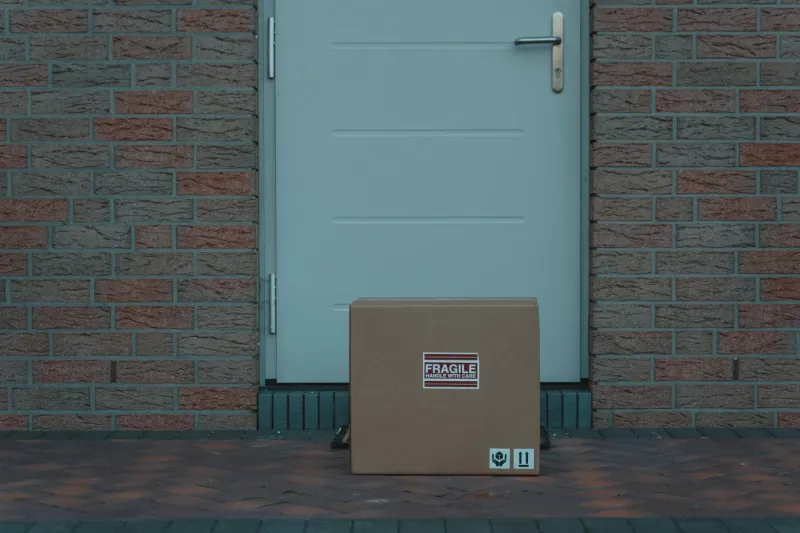
Fast-forward to 2010. Amazon launched Prime. Then came Instacart, Amazon Fresh, Walmart+, and dozens of other services promising to deliver groceries to your door. The pitch was familiar: convenience. No need to go to the store. Have groceries delivered to your home.
But now it was a premium service. You paid extra for the convenience that had once been standard. An Instacart delivery might cost $3.99 plus a percentage tip. Amazon Fresh required a Prime membership. These services were marketed as luxuries for the busy and affluent—a way to reclaim time from the drudgery of grocery shopping.
What's remarkable is that we had essentially reinvented the milkman, but with a completely different economic model. Instead of a local route-based system where the delivery person knew their customers, we had algorithmic matching between anonymous delivery workers and customers. Instead of a stable, well-paid job as a milkman, we had gig work with no benefits. Instead of a price that reflected the true cost of delivery, we had subscription services and hidden fees.
And instead of the relationship that came with regular delivery—the trust, the familiarity, the local connection—we had convenience without community.
The Then and Now
In the 1950s, milk arrived at your door every morning, delivered by someone who knew your family. You paid a fair price for the service. The system created employment and community connections.
In the 2020s, milk can arrive at your door through an app, delivered by a gig worker you'll never meet. You pay extra for the convenience. The system creates precarious jobs and algorithmic matching.
We've come full circle—but the circle is smaller, colder, and more expensive. America abandoned home delivery in favor of the supermarket, imagining that driving to stores and shopping ourselves was progress. Then, as cars became burdensome and time became scarce, we paid premium prices to get convenience back.
The real irony? We could have just kept the milkman. Instead, we dismantled an entire system of local delivery, waited fifty years, and then rebuilt it from scratch—worse, and more expensive than before.