He Knew Your Grandmother's Blood Type: The Slow Disappearance of the Doctor Who Actually Knew You
He Knew Your Grandmother's Blood Type: The Slow Disappearance of the Doctor Who Actually Knew You
Somewhere in a box in a lot of American attics, there's probably a doctor's bag. Black leather, brass clasp, worn smooth at the corners. It belonged to the kind of physician who would show up at your door on a Tuesday night because your mother called and said you had a fever that wouldn't break. He'd come in, sit on the edge of the bed, and already know — without asking — that you'd had rheumatic fever at seven and were allergic to penicillin. He'd known your family for twenty years.
That doctor is largely gone now. And the way he disappeared says a lot about what American healthcare became.
The Doctor as Neighbor
Through much of the early and mid-20th century, the general practitioner occupied a unique role in American community life. He — and it was almost always a he, which is its own complicated history — was a familiar face. In small towns and city neighborhoods alike, the family doctor was someone you saw at church, at the hardware store, at Little League games. That social proximity wasn't incidental. It was the foundation of a medical relationship built on continuity and trust.
House calls were standard practice well into the 1960s. In 1930, an estimated 40 percent of all physician-patient encounters happened in the patient's home. Doctors carried their tools with them and made rounds the way a postman made deliveries — as part of the rhythm of the day. The idea that a sick person should get themselves to a clinic wasn't yet the default assumption.
This model had real limitations, of course. Access was deeply unequal. Rural communities were underserved. Black Americans in the South faced a segregated medical system that was in many cases no system at all. The nostalgia for the old family doctor is, for many Americans, not a personal memory but a cultural mythology — one that was never equally distributed.
But for those who had it, the continuity was genuinely valuable in ways that are hard to replicate.
How the System Quietly Reorganized Itself
The erosion of the personal physician relationship didn't happen overnight, and it didn't happen because anyone decided it should. It happened through a series of structural shifts that each made a certain kind of sense on their own.
The rise of employer-sponsored health insurance after World War II began changing the financial architecture of medicine. As insurance became the primary payment mechanism, billing complexity grew. Physicians started spending more time on paperwork and less on patients. The administrative load that a solo practitioner in 1955 could handle with a part-time receptionist ballooned into something requiring entire departments.
Then came specialization. As medical science advanced through the latter half of the 20th century, the knowledge required to practice at the frontier of any given field became so deep that generalism started to feel like a liability. Patients with serious conditions were routed to specialists. The general practitioner, who had once been the center of the medical universe, began to feel like a gatekeeper — someone you saw briefly before being sent to the person who actually knew what they were doing.
The managed care revolution of the 1980s and 90s accelerated everything. HMOs and large hospital networks bought up independent practices. The solo doctor with a shingle above the door became an anachronism. By the early 2000s, the majority of physicians in America were employed by hospitals or large group practices rather than running their own.
Appointment times shrank. Studies have consistently found that the average primary care visit in the United States lasts between 15 and 20 minutes — and that physicians interrupt patients within the first 11 seconds of them describing their symptoms. There simply isn't time for the kind of unhurried conversation that once defined the doctor-patient relationship.
What a Patient Portal Cannot Replace
Modern healthcare has delivered extraordinary things. Survival rates for cancers that were death sentences in 1970 are now genuinely encouraging. Surgical techniques that once required weeks of recovery happen outpatient. Medications exist today that would have seemed like science fiction to a physician making house calls in 1955.
The technology is better. The knowledge is vastly deeper. No reasonable person would trade the diagnostic capabilities of a 2025 hospital for the black bag and the bedside manner of 1958.
But something in the exchange got lost, and patients feel it. Studies on patient satisfaction consistently find that what people want most from their doctor isn't cutting-edge technology — it's to feel heard, to see someone who recognizes them, to have a relationship with a provider who has some stake in their ongoing wellbeing rather than their next appointment slot.
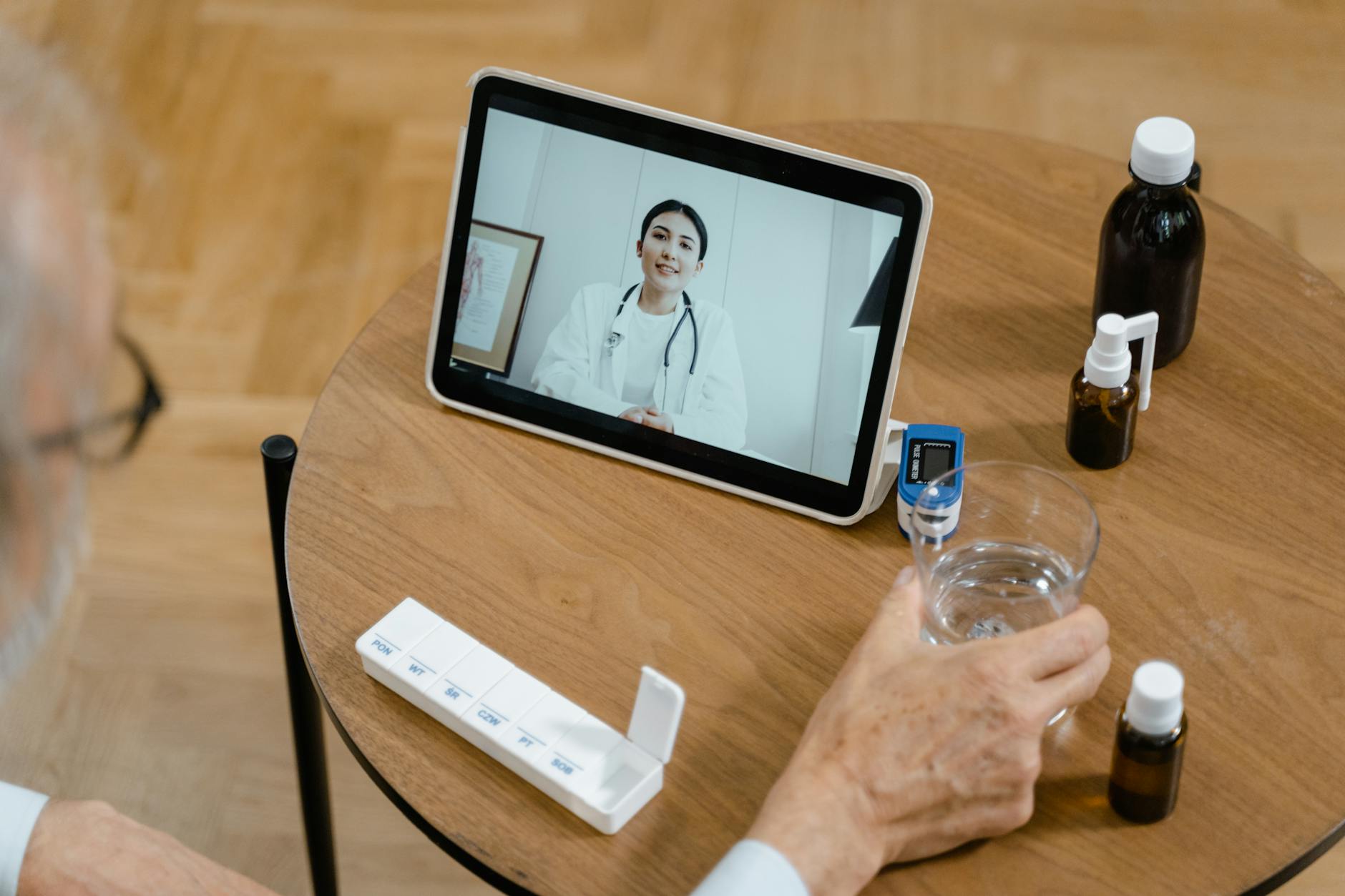
The patient portal — that digital dashboard where you can message your provider and wait 48 hours for a response from someone whose name you may not recognize — is a useful tool. It is not a relationship.
The old family doctor knew things about you that no electronic health record captures. He knew that you got anxious before procedures and needed extra time. He knew your wife had passed two years ago and that you'd been drinking more since then. He knew to ask. That contextual, human knowledge was a form of medical care in itself — and it's the part that the modern system, for all its genuine advances, hasn't found a way to replace.