The Grease-Stained Prophet Who Could Diagnose Your Dodge by Sound Alone
The Grease-Stained Prophet Who Could Diagnose Your Dodge by Sound Alone
Walk into any Jiffy Lube or dealership service center today, and you'll encounter a familiar ritual: the upsell symphony. Your oil change somehow requires a new air filter, cabin filter, transmission flush, and brake inspection. A computer diagnostic costs $150 before they even pop the hood. The service advisor—who's never held a wrench—reads from a script about "recommended services" while your car sits in a bay managed by technicians who specialize in one specific system.
But there was a time when getting your car fixed felt more like visiting a trusted family doctor than navigating a medical billing department.
When Your Mechanic Knew Your Engine's Middle Name
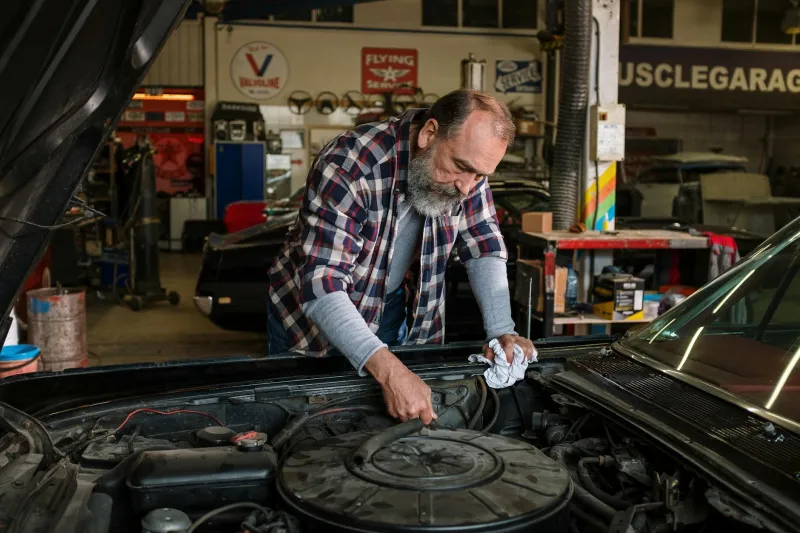
In the 1950s through 1980s, nearly every American neighborhood had "that guy"—the independent mechanic who ran a two-bay garage with hand-painted signs and coffee cans full of bolts. These weren't just repair shops; they were automotive temples presided over by grease-stained prophets who could diagnose a transmission problem from three blocks away.
These mechanics didn't need computers to tell them what was wrong with your 1973 Impala. They'd listen to your engine idle for thirty seconds, take a test drive around the block, and deliver a diagnosis with the confidence of a seasoned physician. "Your timing's off, and that noise isn't your transmission—it's a loose heat shield rattling against the exhaust." Nine times out of ten, they were right.
The relationship went deeper than mechanical expertise. Your neighborhood mechanic knew that Mrs. Henderson's Buick only needed to last until her grandson graduated college. He understood that the young couple with the beat-up Ford pickup were saving for their first house and couldn't afford anything beyond essential repairs. He'd prioritize the work, suggest which problems could wait, and sometimes let you pay next month when money was tight.
The Handshake Economy
The most remarkable aspect of this vanished world wasn't the mechanical skill—it was the trust. Transactions happened on handshakes. You'd drop off your car in the morning, get a call in the afternoon with the diagnosis and price, and pick it up that evening. No written estimates, no service contracts, no fine print about additional charges. If the mechanic said it would cost $80, it cost $80.
This trust went both ways. Customers paid their bills, returned for regular maintenance, and recommended the shop to neighbors. The mechanic's reputation in the community was his most valuable asset, worth more than any advertising campaign or corporate branding.
These shops operated on razor-thin margins but steady relationships. The mechanic might make less per hour than today's technicians, but he owned his business, controlled his schedule, and took pride in keeping the neighborhood's cars running. He'd work on anything from a 1960 Beetle to a 1985 Suburban, accumulating decades of hands-on experience with every make and model.
The Corporate Takeover
Several forces conspired to kill the neighborhood mechanic. Cars became increasingly complex, requiring expensive diagnostic equipment and specialized training. Environmental regulations demanded costly waste disposal systems and certified technicians. Insurance and liability costs skyrocketed. Meanwhile, dealerships expanded their service departments, and national chains like Midas and Valvoline Instant Oil Change standardized the quick-service market.
The final blow came from the cars themselves. Modern vehicles require computer diagnostics, specialized tools, and factory training to repair properly. The neighborhood mechanic who could fix anything with a socket set and intuition found himself outmatched by anti-lock brake systems, fuel injection computers, and airbag sensors.
What We Lost in Translation
Today's automotive service industry is undeniably more efficient and standardized. Technicians receive formal training, diagnostic equipment provides precise readings, and chain shops offer consistent service nationwide. But something irreplaceable disappeared in the transition.
The modern car owner navigates a world of service advisors, extended warranties, and computerized estimates. The relationship is transactional rather than personal. You're a ticket number, not a neighbor. The focus shifted from fixing what's broken to selling what's profitable.
Where the old mechanic might have tightened a loose belt for free while changing your oil, today's service centers identify it as a billable "belt tension adjustment." The diagnostic fee alone now costs more than many complete repairs used to cost in the handshake era.
The Survivors
A few independent shops still operate in small towns and urban neighborhoods, run by mechanics who learned the trade before computers took over. These survivors maintain some of the old culture—they know their customers' names, provide honest assessments, and still believe a handshake means something.
But they're fighting a losing battle against complexity, regulation, and economics. When the current generation retires, few young mechanics have the capital or inclination to open independent shops. The future belongs to corporate chains and dealership service departments.
The Price of Progress
Modern automotive service is safer, more regulated, and often more competent than the old neighborhood garage. Today's technicians use precision instruments instead of intuition, follow standardized procedures instead of improvising fixes, and work in clean, well-lit facilities instead of cramped, oil-stained bays.
But we traded something valuable for that progress: the human connection that made car repair feel less like highway robbery and more like community care. The mechanic who knew your car's history, understood your budget, and stood behind his work with nothing more than his word.
In our rush toward efficiency and standardization, we lost the grease-stained prophet who could diagnose your Dodge by sound alone—and somehow, our cars have never felt quite as trustworthy since.