Fold the Map Wrong One More Time and See What Happens: Life Before GPS Told You Where to Go
Fold the Map Wrong One More Time and See What Happens: Life Before GPS Told You Where to Go
Somewhere in a garage or a closet or a landfill, there's a Rand McNally Road Atlas with a coffee stain on the Tennessee page and a spine that gave up completely around 1994. If you grew up in America before the mid-2000s, you either owned one of those or you rode in a car with someone who did. It was the bible of the road trip — dog-eared, occasionally argued over, and absolutely essential.
Today, most Americans under 30 have never unfolded a paper map in a moving vehicle. They've never had to. And while that's an objectively convenient development, something genuinely interesting disappeared along with the atlas.
The Pre-GPS Navigation Toolkit
Let's be specific about what people actually used, because "paper maps" undersells the whole ecosystem.
The Rand McNally Road Atlas was the gold standard — updated annually, sold at gas stations and truck stops nationwide, thick enough to cover every state with enough detail to find your way through most cities. Families kept one in the car the way they kept a spare tire: you hoped you wouldn't need it desperately, but you were glad it was there.
Below the atlas in the hierarchy were the free state maps available at welcome centers and rest stops along the interstates. These were great for broad orientation and completely useless once you needed to find a specific street in an unfamiliar town. Gas station maps filled a similar role — and gas stations handed them out for free for decades, understanding that a driver who stopped to grab a map might also buy a tank of gas and a cup of coffee.
Then there were the hand-written directions. Someone's aunt describing the route to her house: "Go past the old Kmart — it's a furniture store now — and turn left at the light. If you see the water tower, you've gone too far." These directions were specific to a local's mental geography, which meant they were incredibly useful if you interpreted them correctly and completely baffling if you didn't.
And when all else failed, you pulled over and asked someone.
The Art of Asking for Directions
Asking a stranger for directions used to be a normal social transaction. Gas station attendants — back when gas stations had attendants — were essentially informal navigation consultants. Locals outside hardware stores or diners were reliable sources. Even flagging down another driver wasn't unusual in genuinely confusing situations.
What's interesting, looking back, is how much local knowledge lived in those exchanges. A gas station owner in rural Georgia didn't just know which road went where — he knew which bridge had been out for three weeks and which shortcut only worked if you had a truck. That kind of hyperlocal, real-time information was irreplaceable, and it lived in people's heads rather than on any map.
GPS didn't just replace paper. It replaced a whole informal network of human knowledge-sharing that most people never thought of as a system until it was gone.
Getting Lost Was the Plot
Here's the part that's genuinely hard to explain to someone who grew up with a smartphone: getting lost used to generate some of the best travel stories.
Not the dangerous, middle-of-nowhere-at-2am kind of lost — though that happened too, and it was terrifying. The more common version was the scenic kind. You missed a turn, ended up on a two-lane state road instead of the interstate, and stumbled across a roadside barbecue joint or a small-town festival or a stretch of countryside that you would never have seen otherwise. The detour became the memory.
Family road trips of the 1970s, 80s, and 90s were threaded through with these moments. The wrong exit. The argument about whether to turn around or keep going. The discovery that "keep going" led somewhere genuinely worth finding. There was a texture to navigating imperfectly that GPS has largely smoothed away.
That's not a complaint, exactly. Getting hopelessly lost with three kids in the back seat on a July afternoon in a car without air conditioning was nobody's idea of a good time while it was happening. But ask those same kids — now in their 40s — about the family road trip, and the wrong-turn story is the one they tell.
What Turn-by-Turn Actually Changed
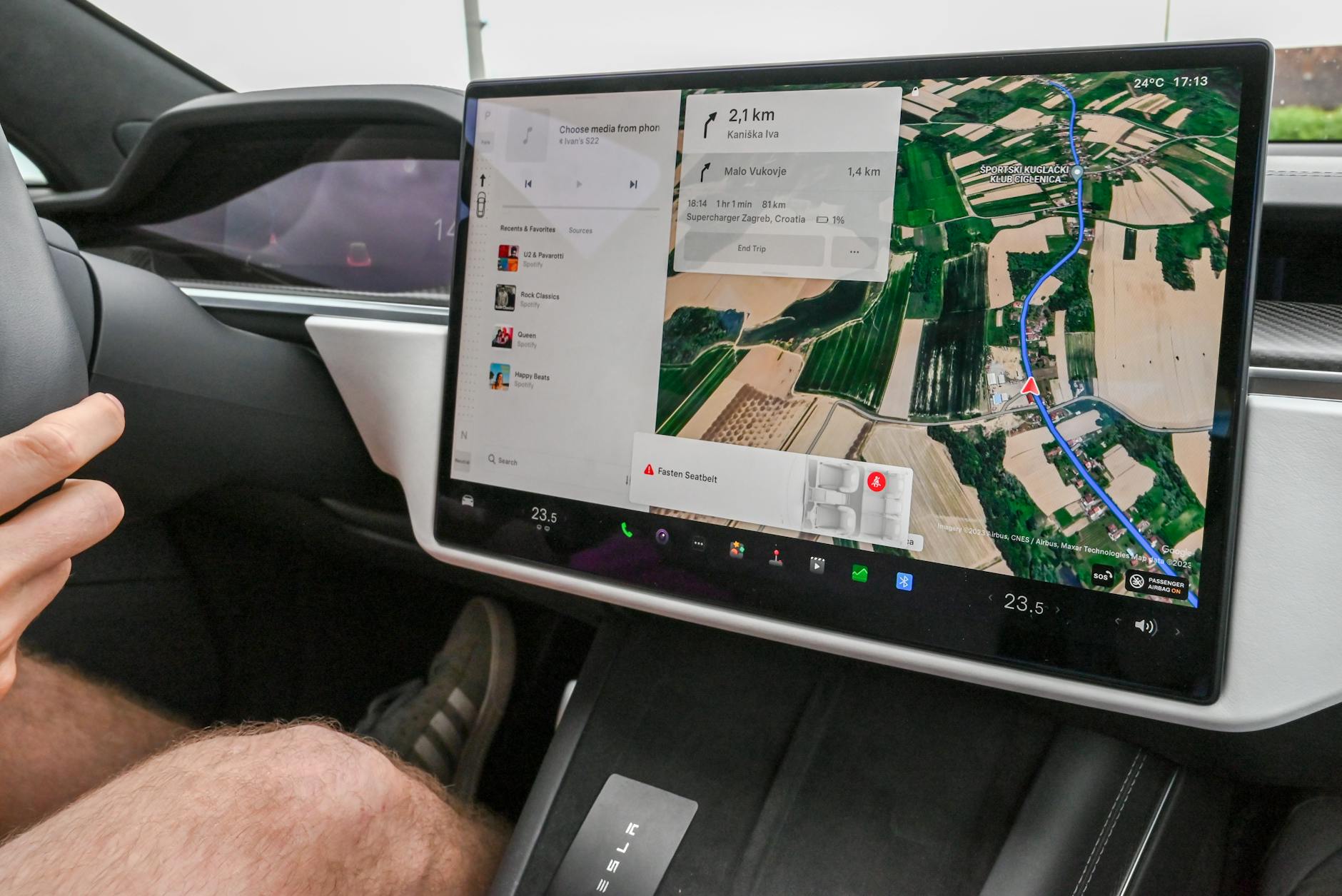
GPS navigation — first through dedicated devices like Garmin and TomTom units in the early 2000s, then baked into every smartphone via Google Maps and Apple Maps — didn't just make navigation easier. It changed the relationship between driver and environment.
When you navigated by map, you had to build a mental model of where you were going. You understood, roughly, which direction you were heading and how the roads connected. You had a spatial awareness of your route. When you follow turn-by-turn audio instructions, you don't need any of that. You just do what the voice says. Studies on spatial cognition have noted that heavy GPS reliance correlates with a reduced ability to form mental maps — a skill humans have been developing for the entirety of our existence.
There's also the question of serendipity. GPS is ruthlessly efficient. It finds the fastest route and it keeps you on it. The happy accident — the unexpected detour, the unplanned stop — requires you to deviate from the instructions, and the app will immediately start recalculating to get you back on track. Wandering, as a navigational mode, has been optimized out of the experience.
The Road Still Goes Somewhere
None of this is an argument for throwing your phone out the window and buying an atlas. GPS navigation is genuinely, obviously better at getting you from Point A to Point B efficiently and safely. Fewer people get dangerously lost. Road trips are less stressful. Delivery drivers cover more ground. The benefits are real.
But it's worth pausing to notice what the old way carried with it — a certain engagement with place, a reliance on other people, a tolerance for uncertainty that made the journey itself feel like part of the adventure. The map didn't just show you where you were going. It made you think about it.
The then was messier. The now is smoother. And somewhere between those two things, a certain kind of road trip story stopped being possible.